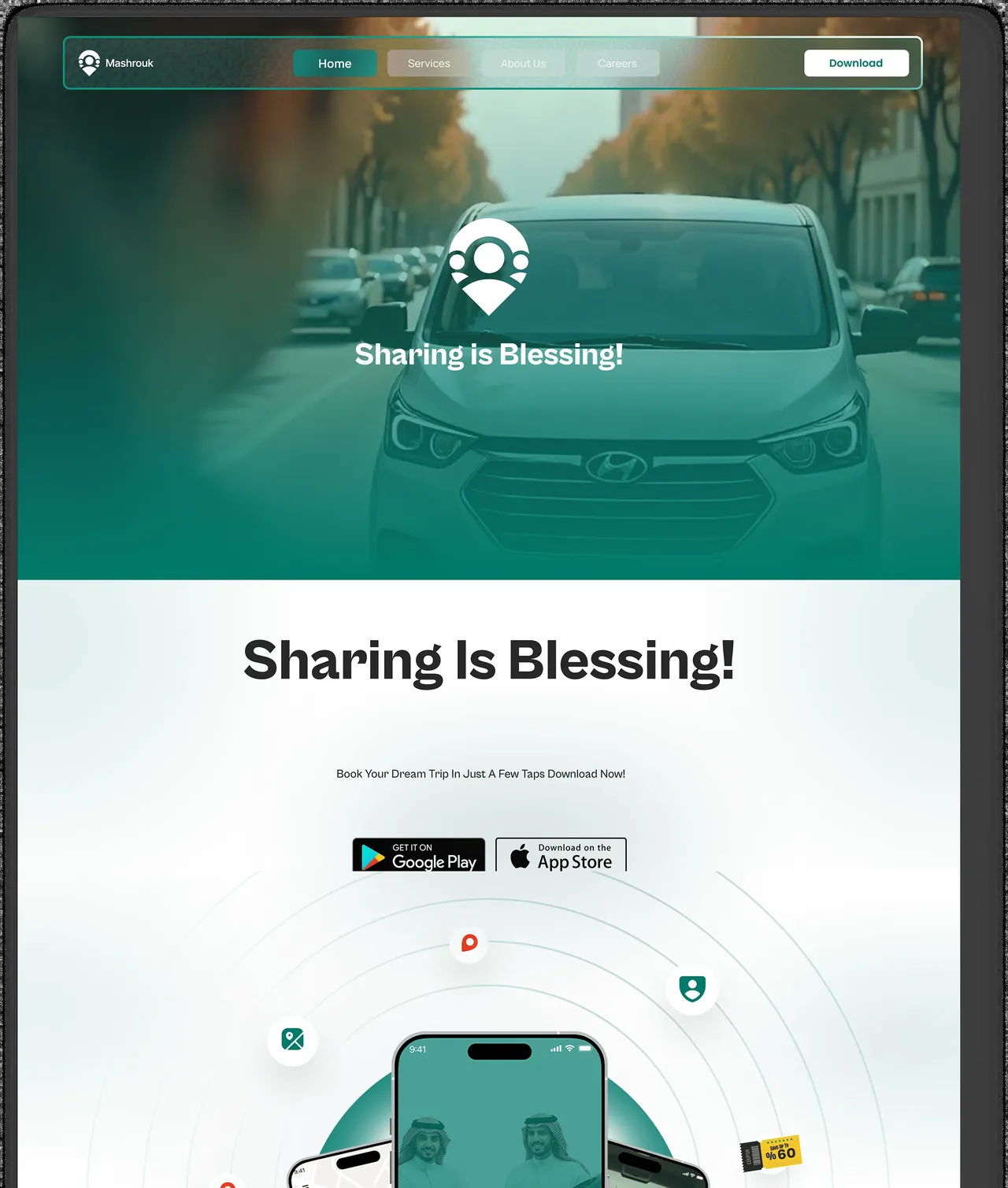
One page, one decision
Mashrouk’s landing page has a narrow job: help a first-time visitor decide whether shared rides fit their trip, then send them to the app. That makes the order of information the main design decision: what the service is, what a rider can do, why to trust it and where to download.
I worked on the page structure, the English and Arabic copy and the UX writing. The visual design was shared with the team.
From a shared-ride idea to a rider’s decision
The page opens with a short travel promise, then seat selection, support and the booking flow make the app concrete. Someone weighing up a ride needs that sequence long before an explanation of how seats are allocated.
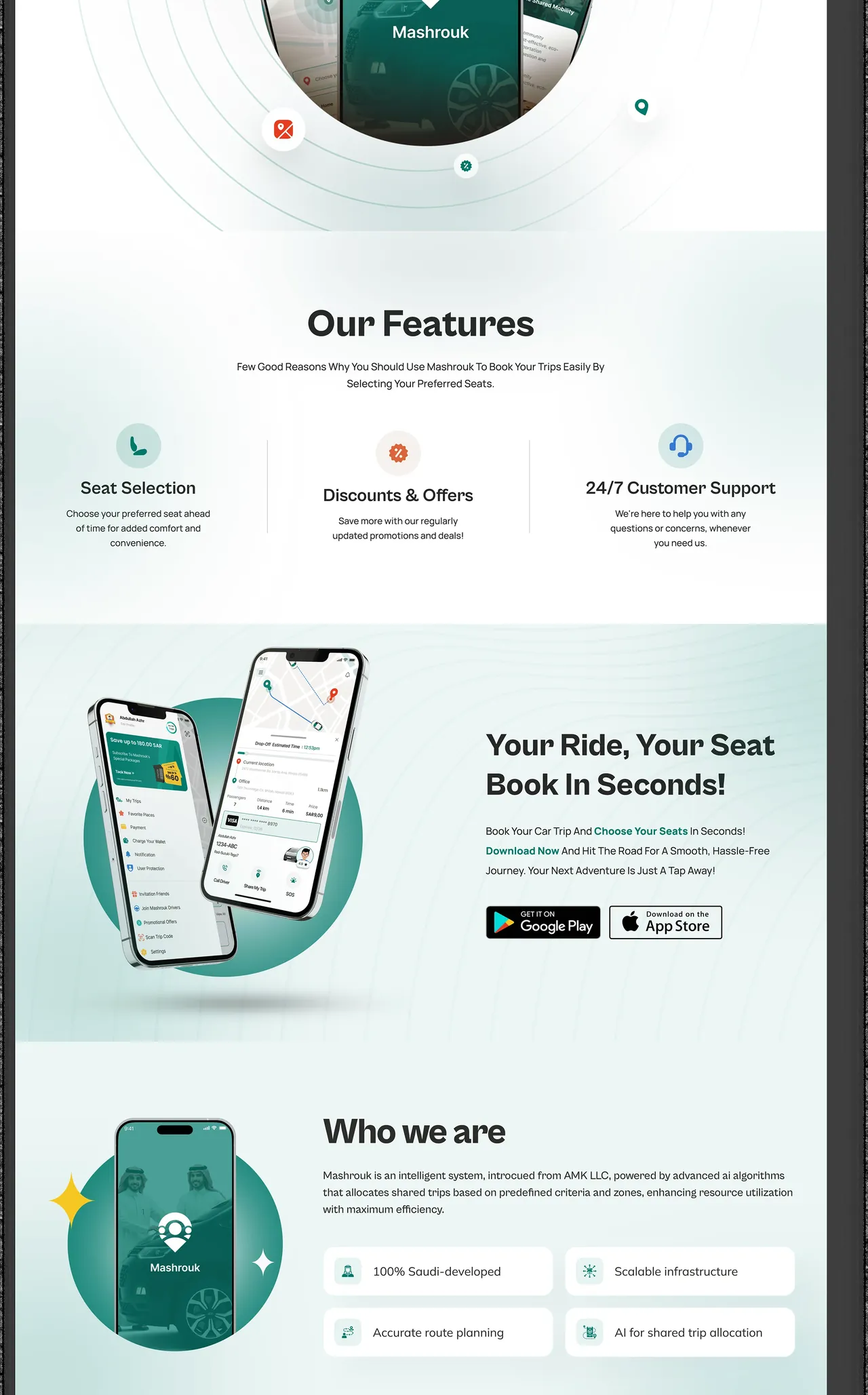
Features lead into a more concrete ride-booking explanation.
The phone mockups place the detailed interaction inside the app. The website’s job is to explain why it is worth continuing there.
Saying plainly what is shared
A first-time visitor needs to know what is shared, how a seat relates to a route and where booking happens. The short opening creates interest; the feature and booking sections give the promise a practical meaning.
Many people in Saudi Arabia still ask how ride sharing differs from ride hailing. The category is new to them, so the sentence after the promise matters as much as the promise itself.
Arabic says what the trip feels like
The Arabic page uses its own expression and leads with the experience of the trip. It calls the service رحلات تشاركية where the English says shared rides, a better fit than the broad نقل الموظفين, which in Arabic search also means transferring an employee between jobs.
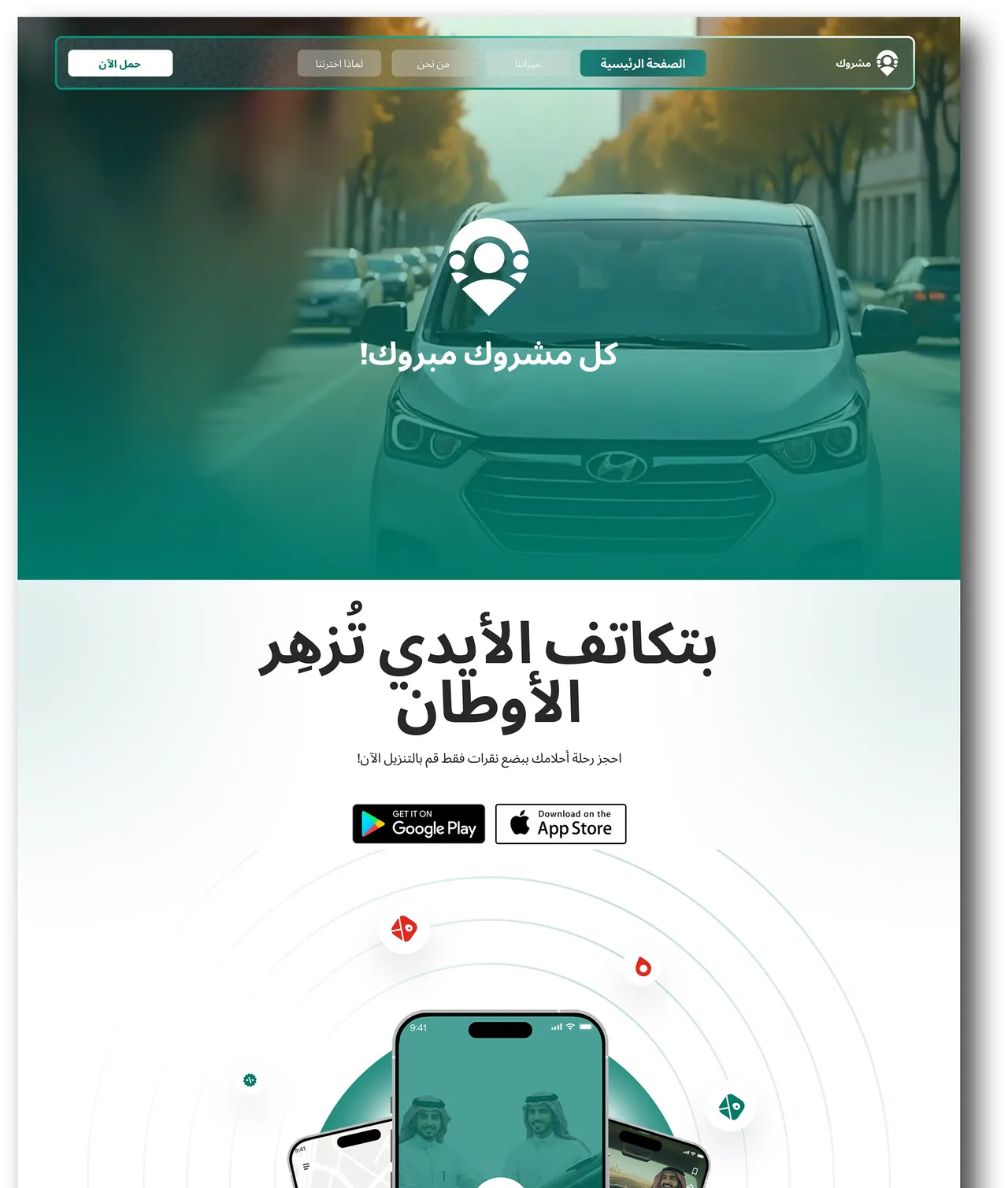
The Arabic opening frames the same service for its readers.
The Arabic promise needs a second sentence
رحلات تشاركية is warm and memorable, but the same words are also used for booking flights. The sentence that follows the promise has to anchor the idea in road travel: a route, a driver, a seat.
Arabic ride-sharing services describe the category through the driver’s route and the passenger’s seat. That concrete language is what a new reader needs next to the marketing line, and it is the first thing I would strengthen in a revision.
Asking again, once the questions are answered
App-store actions appear near the promise and again after the features and booking explanation. The action stays the same; the reader changes. Someone ready at the top can leave for the app straight away, while someone who needed the details meets the same choice again once they understand seat selection and the next step.
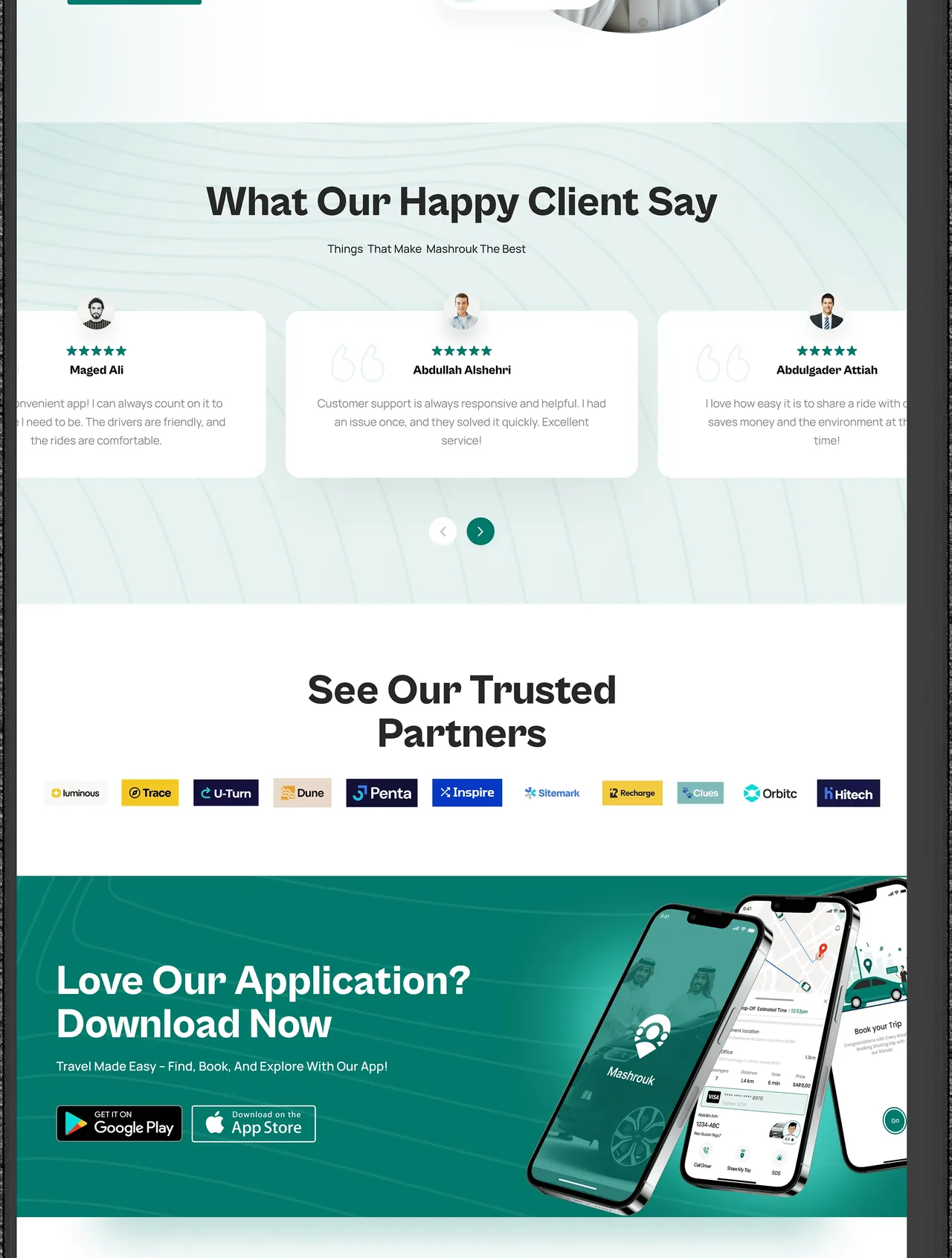
The page returns to the app action after explaining the offer.
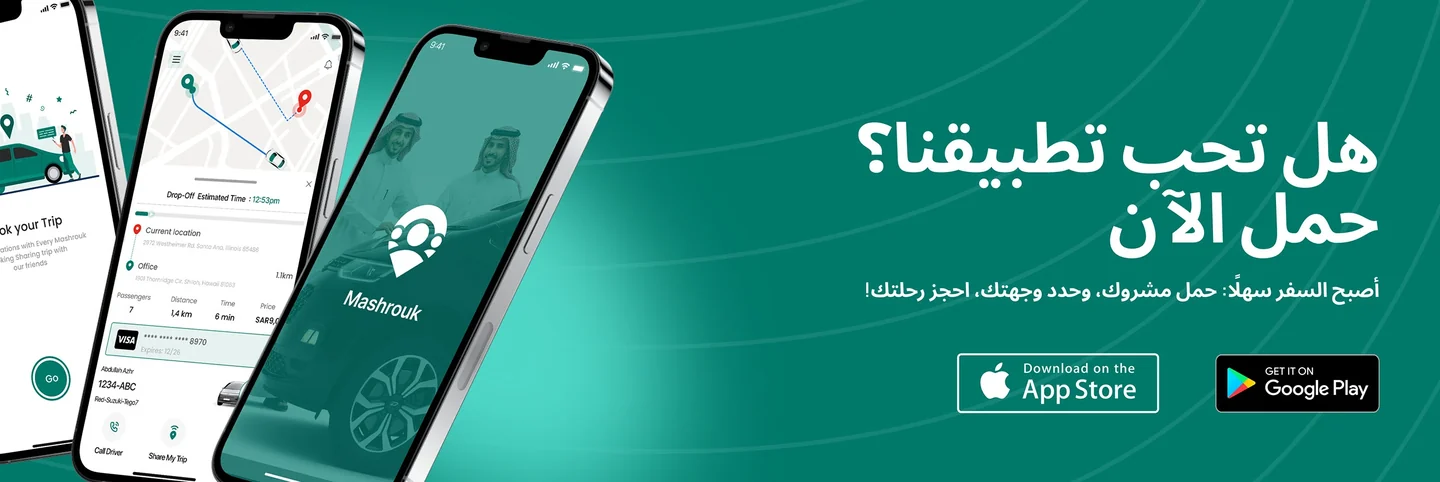
The Arabic page closes on both app stores, after the booking and company explanations.
Both languages end the same way: two app stores, clearly named, after the explanation is complete.
Trust needs specific proof
The full page has places for customer quotes, star ratings and a row of logos, the slots where social proof was meant to sit. Proof persuades when it is specific, so those slots need real riders, real ratings and partners who agreed to be named.
Riders’ questions about shared trips keep returning to safety, payment and trip arrangements. A help section should answer those next, in the company’s own words.
The finished page
The English and Arabic pages form a complete landing-page flow, from the opening promise through features and booking to the final download panel. The live pages still follow that sequence.