Every operating problem needs its own entry point
Fleet intelligence, maintenance and driver management answer different questions for different people in an operations team. Each needed a clear entry point, a plain explanation and a route into the detail.
I worked on the content strategy, the bilingual copy and the structure of the solution pages. Visual design was shared with the team.
From a platform promise to named solutions
The site moves from a platform promise into named solution areas. Fleet intelligence, maintenance and driver operations are not interchangeable labels: each points to a different operating question. A dedicated page gives one of those jobs room to explain itself, well beyond a homepage summary.
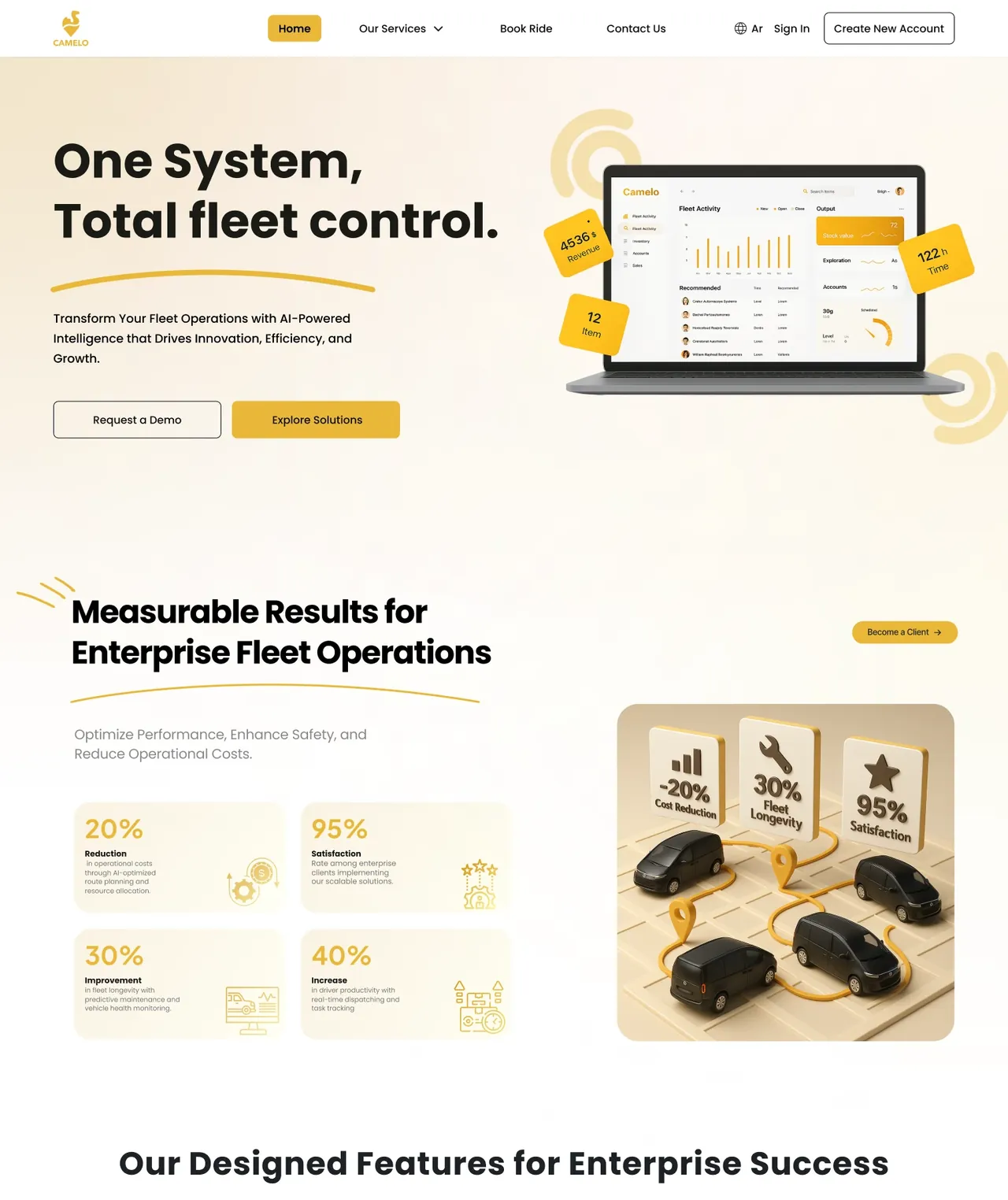
The opening states the platform promise and introduces the broader offer.
A repeatable pattern for every solution
I organised the content in three levels. The overview introduces the platform; the solutions directory separates the use cases; each detail page moves from a specific operating problem to the capabilities that address it and why they matter to the business. Once a reader has learned the pattern on one page, every other page is easier to read.
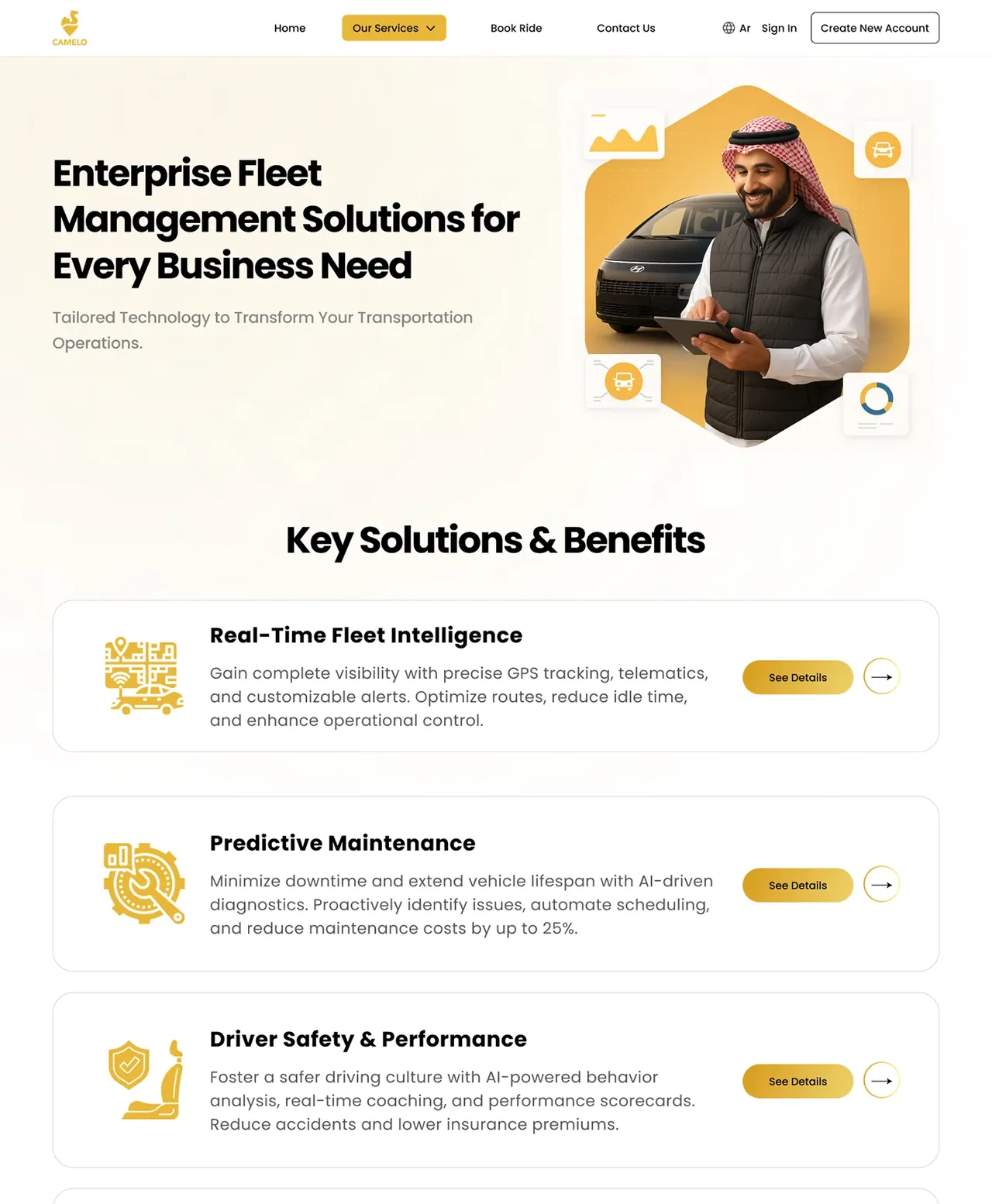
The overview gives each solution a distinct explanation.
The Arabic pages keep the whole map
The Arabic overview, solutions directory and detail pages carry the full hierarchy in right-to-left reading, not just a translated headline. A fleet manager can browse the same map, at the same depth, in either language.
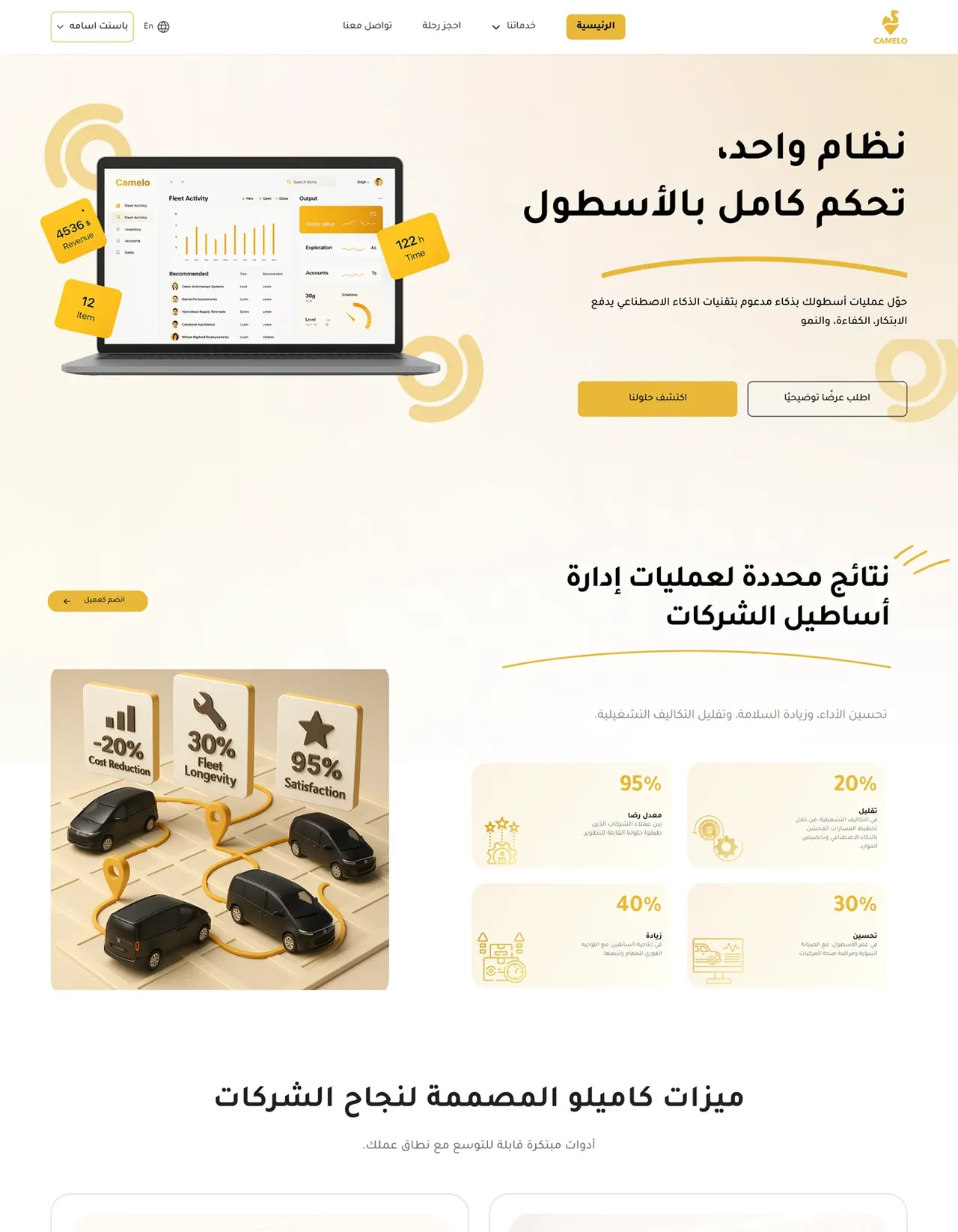
The Arabic opening shows a separately composed route into the offer.
Operators and passengers ask different questions
The complete presentation covers fleet intelligence, predictive maintenance, driver management, fuel, integration and a white-label ride-hailing offer. Those describe operating responsibilities and delivery models. An operator asks how to manage vehicles and teams; a passenger asks where the bus is or how to book a seat.
Buyers draw the same line when they search. In English, fleet-management software is a different query from bus tracking. In Arabic, النقل الجماعي is passenger language: operator names, stations, schedules and tickets. The page has to name its operations audience before it lists technical capabilities.
A capability becomes clear when the task is named
The driver-management page gives the solution directory real depth. Coaching, scorecards and certification tracking are separate tasks inside one operating responsibility, and each label is followed by an explanation, so a manager can tell them apart instead of reading them as synonyms.
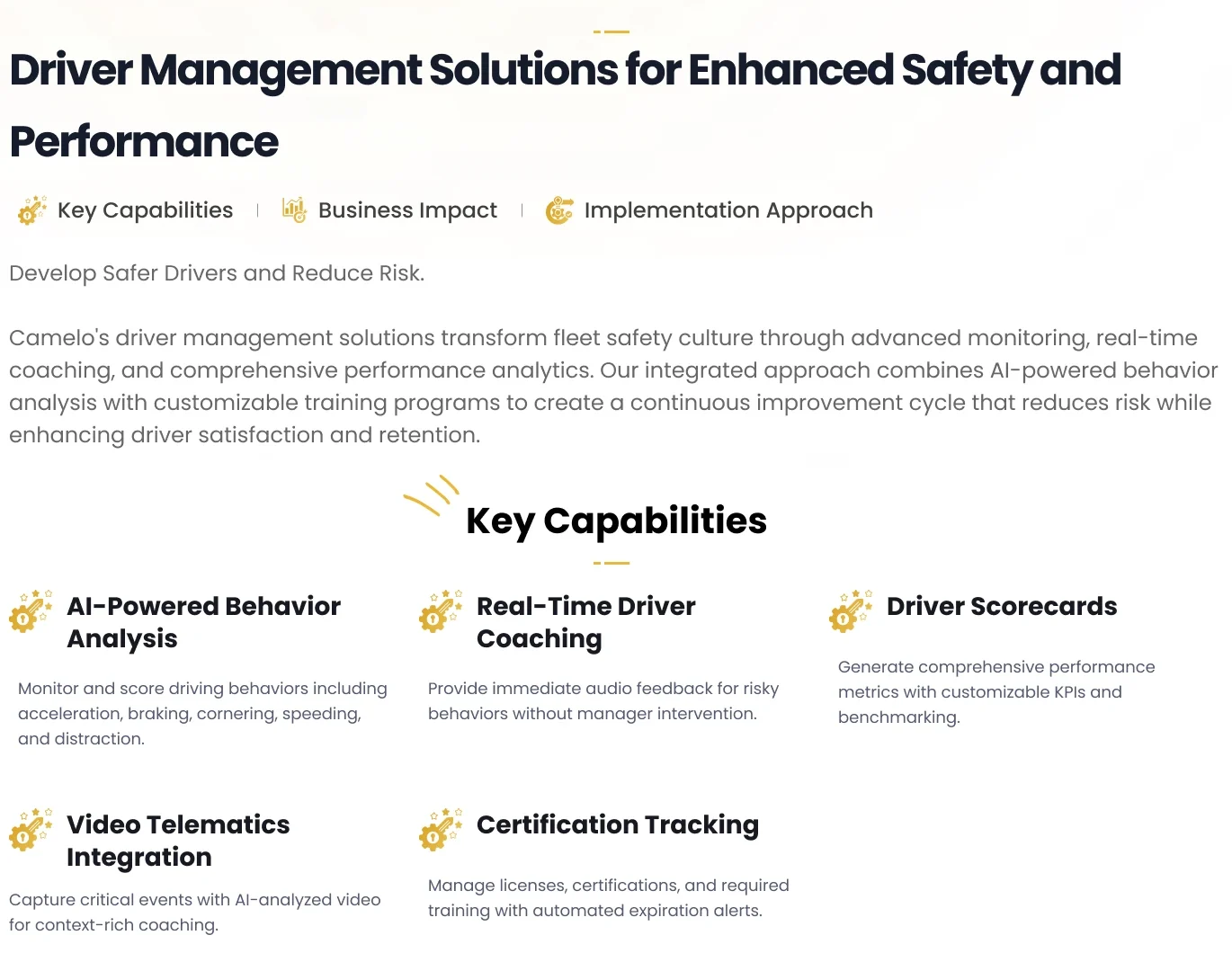
The driver page names coaching, scorecards, video integration and certification tracking as separate capabilities, each with its own explanation.
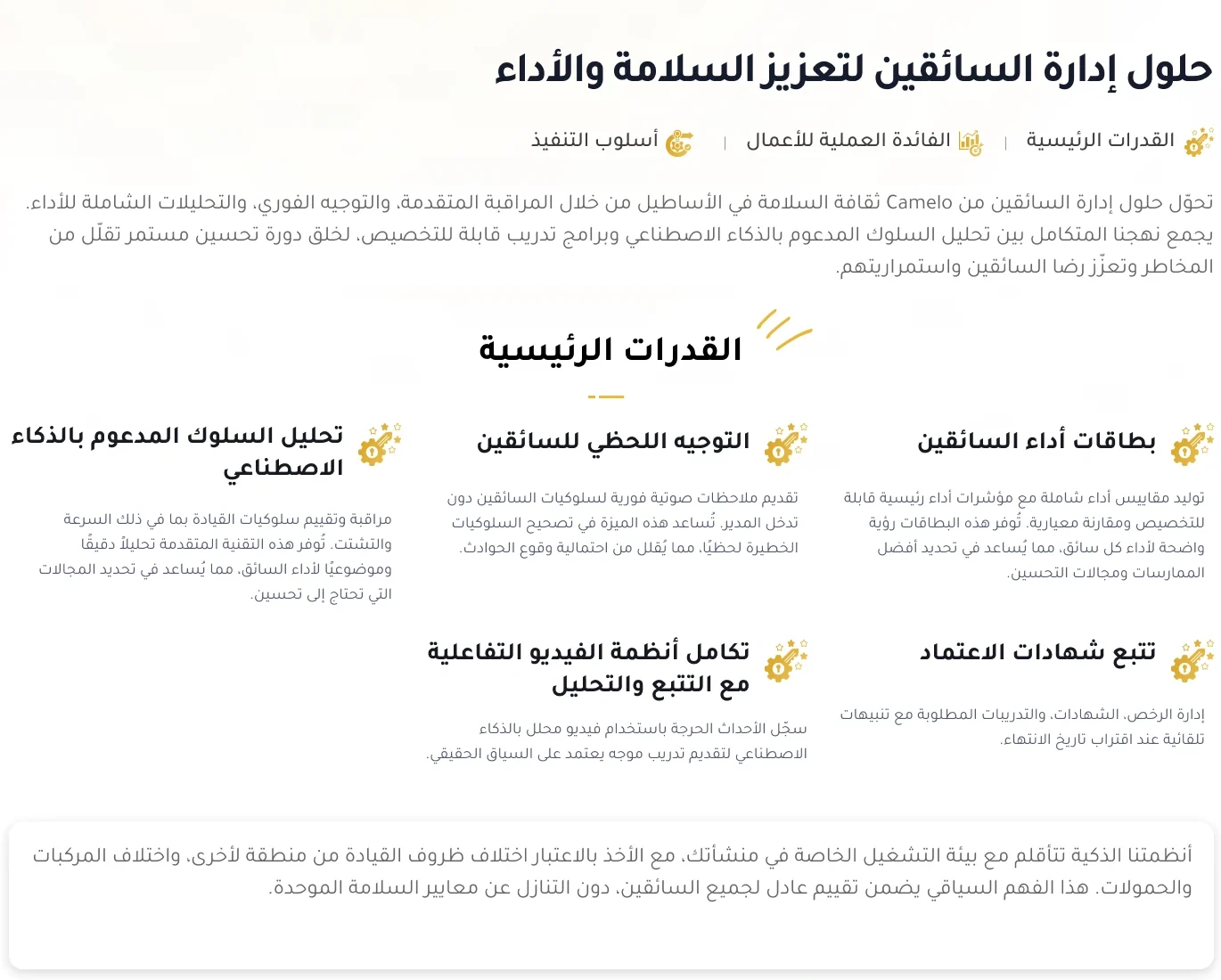
The Arabic driver page gives each operational task its own explanation in the vocabulary of fleet management.
The English and Arabic pages carry the same depth, which is where bilingual content most often thins out.
Arabic needs the vocabulary of the operating job
Arabic bus-management pages describe routing, live tracking and the relationship between passengers, drivers and operators. That is the language an Arabic-speaking operations buyer recognises from their own day.
The Arabic CAMELO pages already separate the management areas. The next refinement is precision: the exact technical terms, who receives each alert and who takes the next action. Those details matter more to an operator than a general promise of smarter transport.
The next step must fit the reader
For an operations buyer, a contact button needs context: which problem does this solution address, and which capabilities matter? The flow I wrote explains the solution first and asks for the enquiry after.
The presentation also includes a white-label offer alongside the operating solutions. A business launching its own branded service needs to understand delivery and integration, while a driver-management buyer needs operational scope. Each deserves its own conversation, and the navigation should keep a passenger’s Book Ride button away from pages written for operators.
| What the reader wants | What the page must explain | The conversation it leads to |
|---|---|---|
| Manage transport operations | Capabilities, workflows and implementation scope | Discuss an operating requirement. |
| Explore a branded service | Delivery model, integration and responsibilities | Discuss the platform offer. |
What the project leaves behind
The finished pages include a company overview, a solutions directory and detailed solution pages in English and Arabic: a content hierarchy that takes an operations team from a platform promise to its own problem in a few steps.