Many services, one clear map
A traveller booking an airport transfer and a university arranging a term of student transport want different information and a different kind of conversation. The content had to make each path visible while keeping the sense of one company behind them.
I worked on the information architecture, the bilingual content, the service messaging and search-aware UX writing. Design and development were shared with the team.
Passenger needs, not one generic transport pitch
A person seeking an airport transfer makes a different choice from a company arranging employee transport or an organiser planning Umrah travel. The homepage introduces the operator; the service directory lets each need be recognised without forcing every audience through one long story.
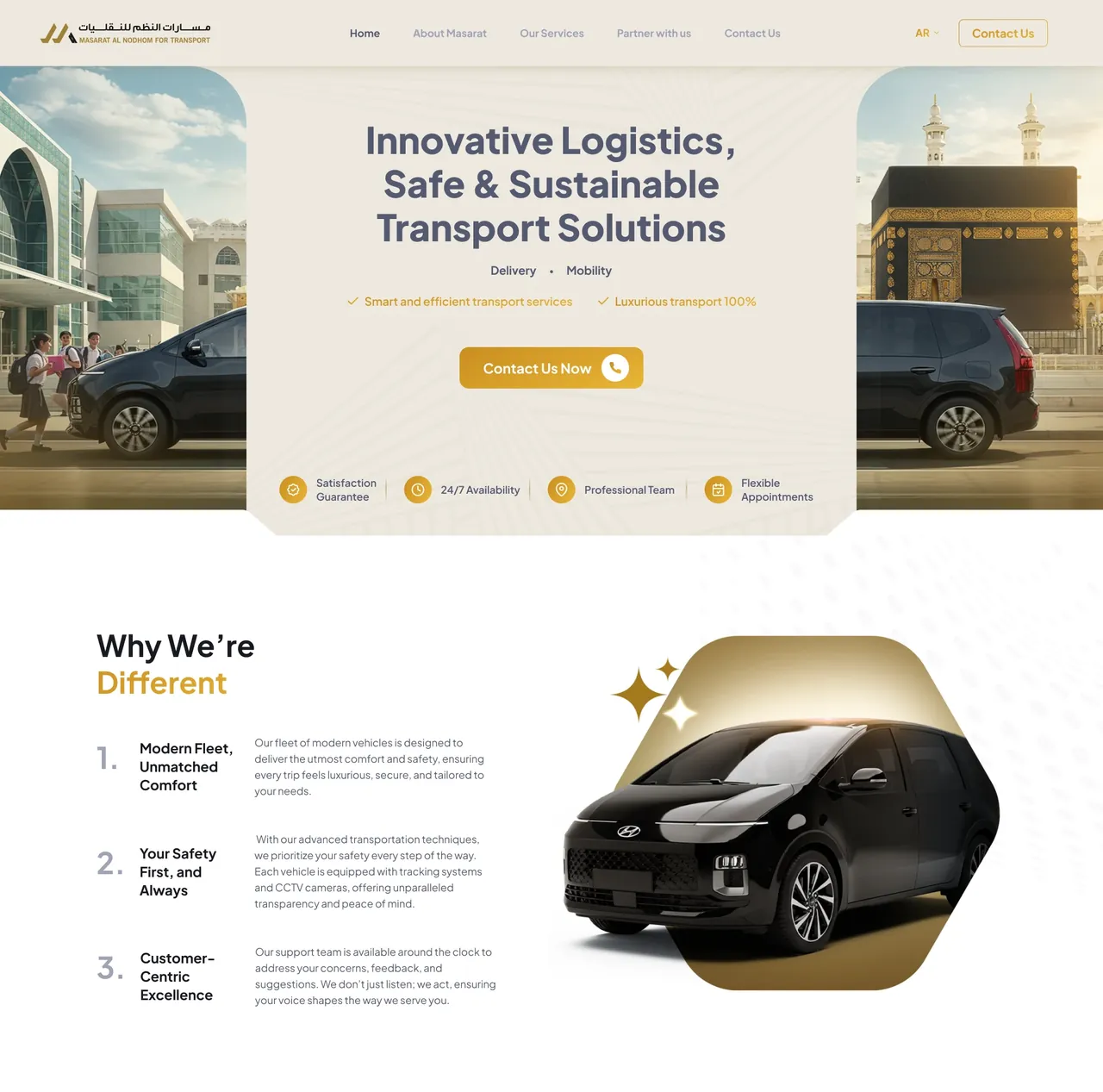
The opening frames the company and leads into specific transport needs.
Arabic service names match the practical job
The Arabic site names العمرة، النقل الجامعي and النقل من وإلى المطار directly, where the English says Umrah, university students and airport transfers. In either language, a visitor can identify their route before reading the company story.
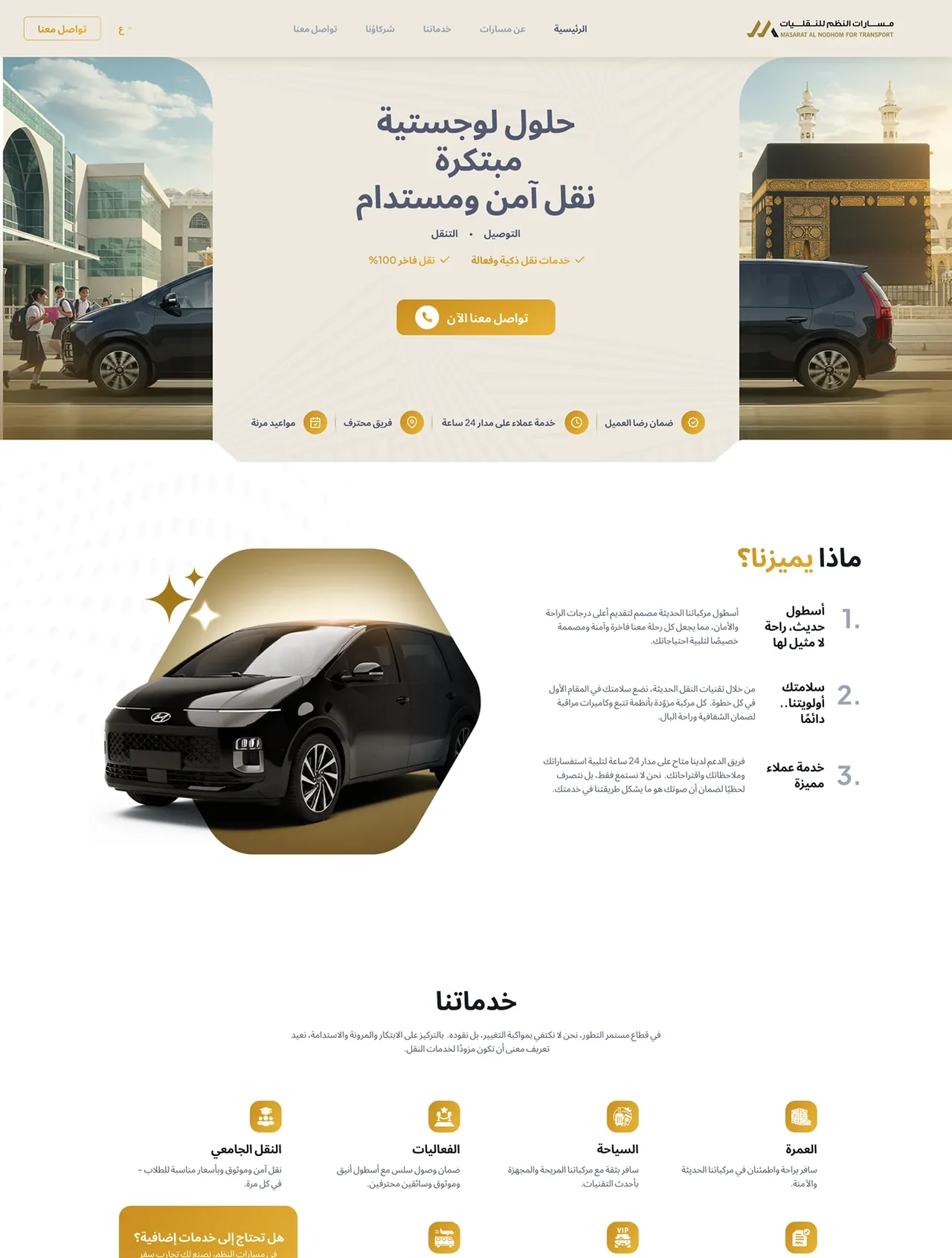
The Arabic page carries the company story in its own layout.
Contact comes after the service is clear
The contact route appears once a visitor has found the relevant service. That suits a tailored transport request, where the date, route, passenger count and vehicle may all need discussing. It is a different action from Mashrouk’s instant app download, and the copy treats it that way.
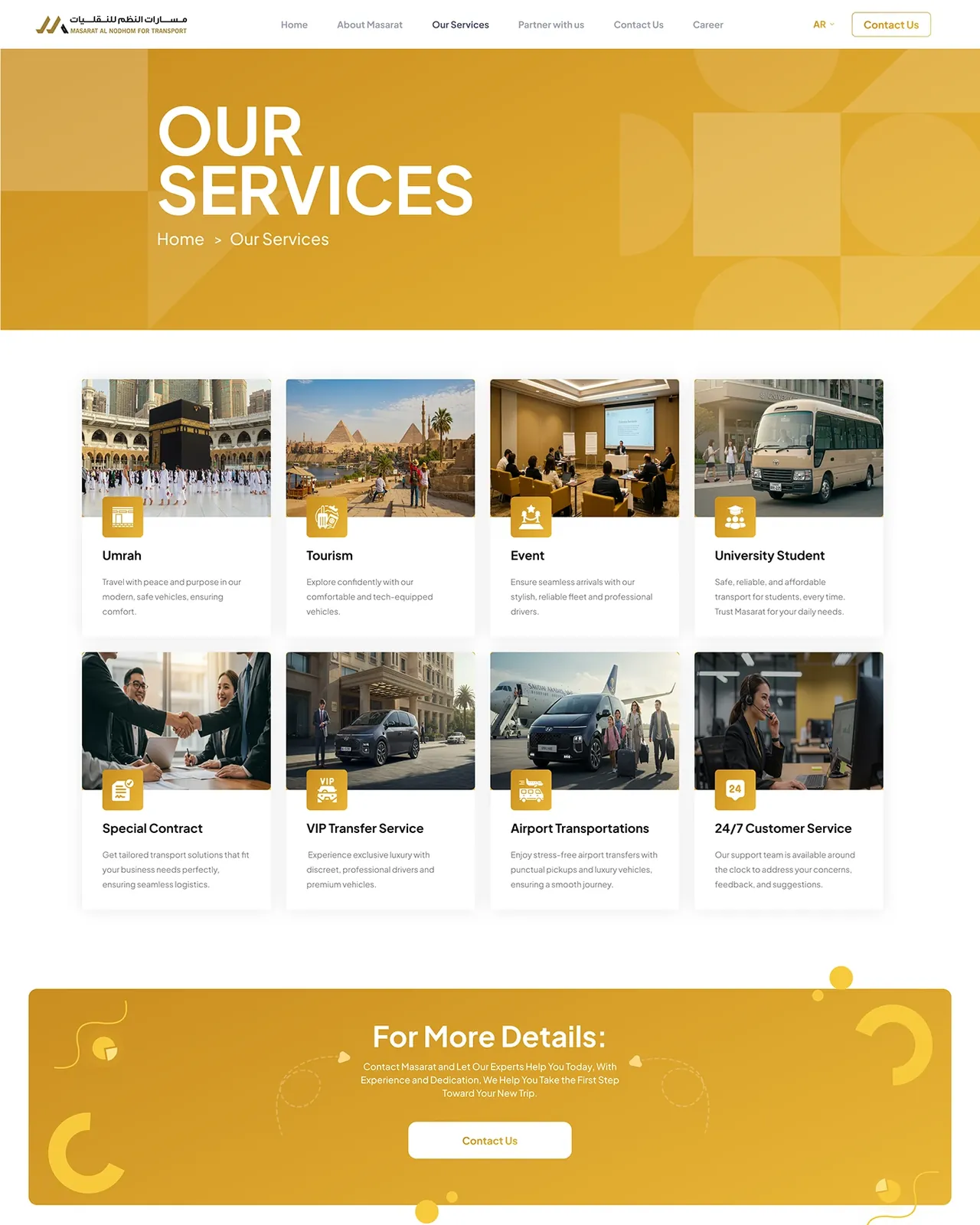
The service map makes different visitor needs scannable.
A transport request has a shape before it has a price
An airport trip starts with origin, destination and arrival time. An Umrah organiser or a university also needs to discuss passenger groups, frequency and the right vehicles. The service directory gives each request a recognisable starting point before the visitor reaches company information or a general contact form.
Travellers looking for airport transfers name cities such as Jeddah and Madinah, while Riyadh residents ask how to commute without a car. Those are different journeys. Each service page should state the request details the company can confirm, rather than list every place a traveller might mention.
Partnership asks for a different kind of information
Alongside the ordinary contact page, the site includes Client Registration. Company details, a contact person and the type of organisation are grouped separately, before the declaration and the send button.
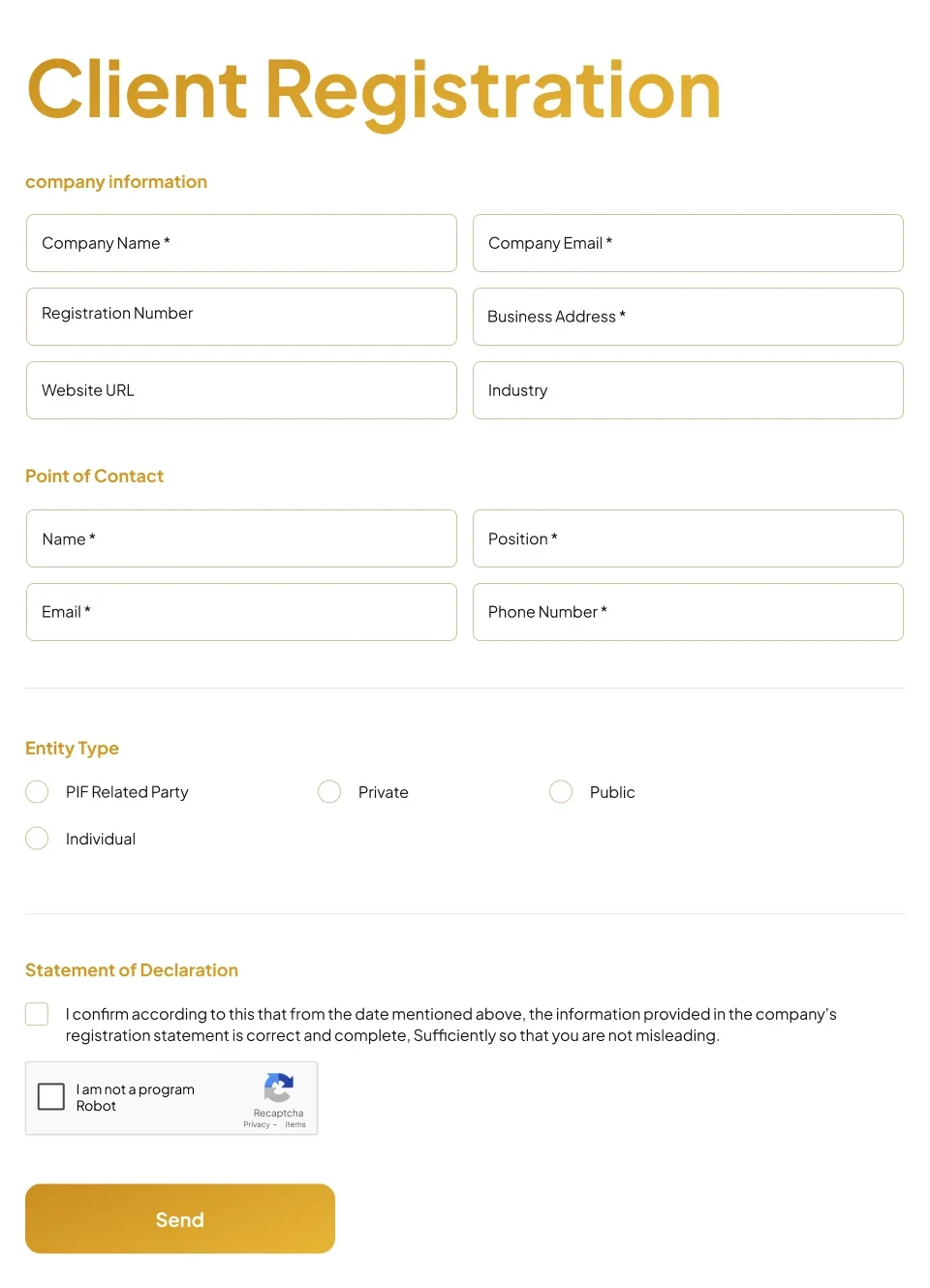
Client registration groups company details, a named contact and the type of organisation, a different conversation from a one-off trip enquiry.
The grouping signals an organisational conversation, with more context than a one-off passenger enquiry. Because the form asks for more, the page leading to it should explain why an organisation would register and what happens next.
Localisation reaches the form itself
The Arabic registration screen uses distinct headings for the company’s information and its main contact. That hierarchy matters when a representative fills in a form on behalf of an organisation, and it carries the service’s business context all the way to the enquiry.
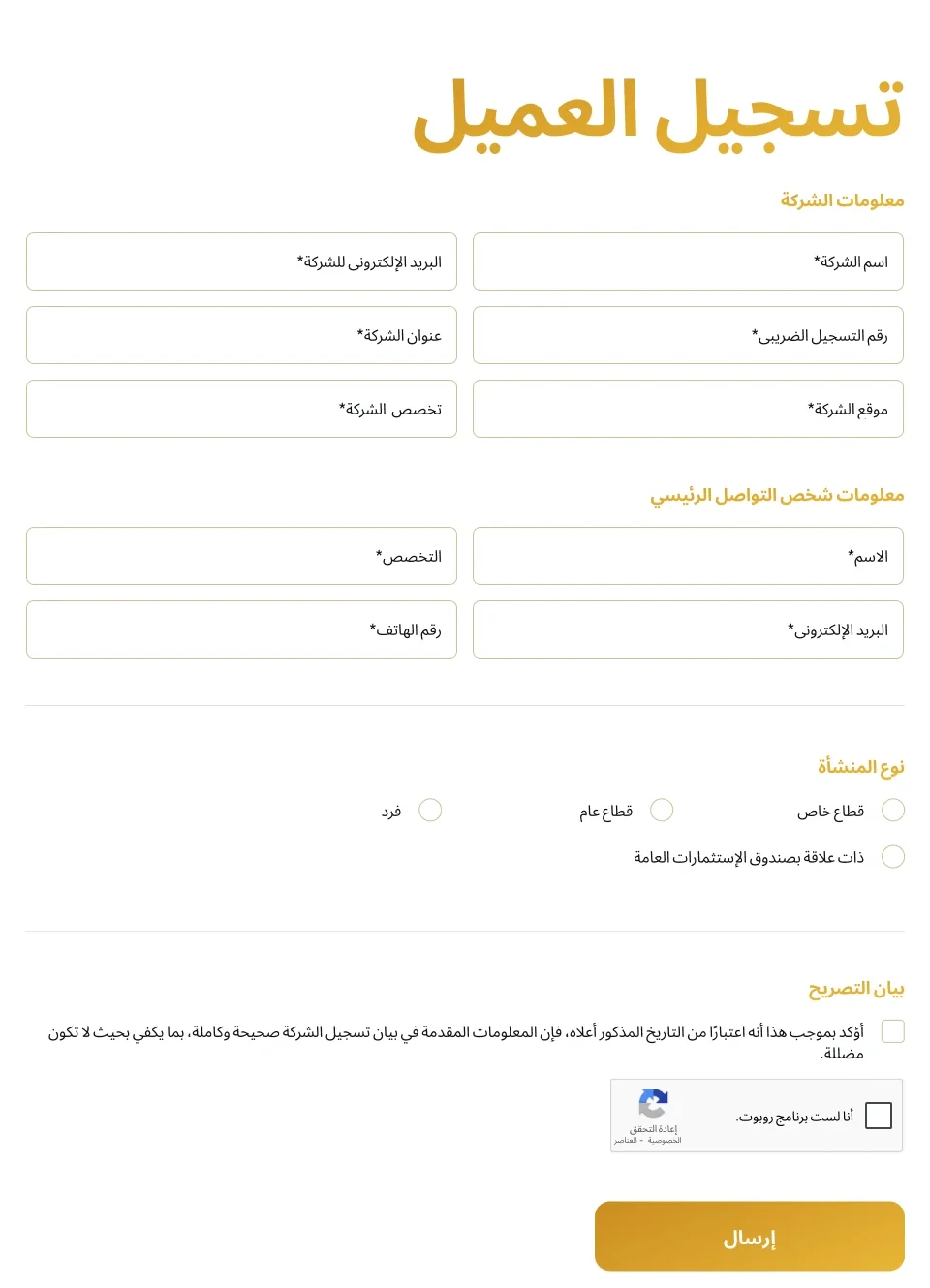
The Arabic form groups the organisation’s details before the declaration and the send button.
A form like this works best when both languages agree on required fields and entity types, the declaration reads clearly, and the visitor knows what will happen after they press send.
Proof belongs beside the service it supports
The full presentation includes fleet choices, company history, reviews and the service map. Each does a different job: a vehicle explains capacity, the company section supplies context, and a substantiated customer story builds trust. A generic star rating says little about a particular trip.
This is also where Masarat and Mashrouk part ways. Mashrouk leads to an app download; Masarat leads to a tailored conversation, and its content asks for the detail that conversation needs.
A service map that still holds
The homepage, About page and service pages made a wide range of transport easy to navigate. The live site keeps this structure today, with routes into each service and into contact.