Masarat Al-Nodhom
Organising a transport business around the journeys people need
Masarat Al-Nodhom serves passengers and organisations with different reasons to travel. I worked on its bilingual website content and information architecture, connecting the company proposition with a service portfolio that includes Umrah, airport transfers, university transport, events and contract work.
Bilingual information architecture, website content, service messaging and search-aware UX writing. Design and development were shared with the team.
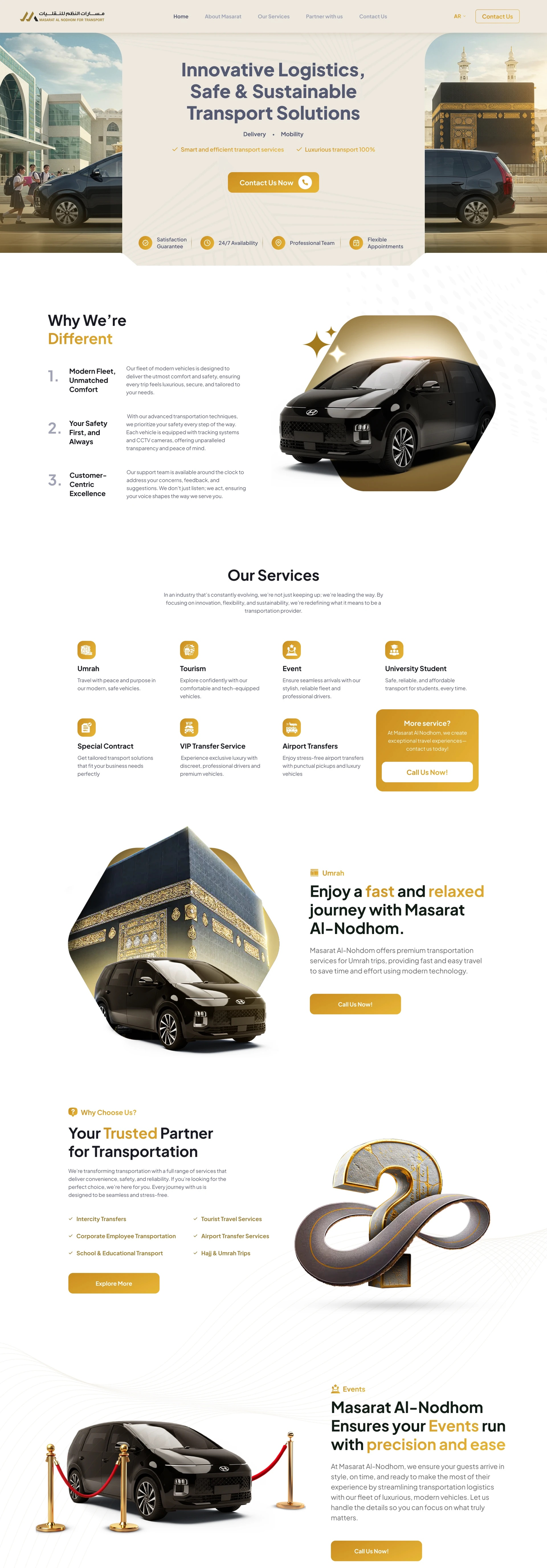
The project at a glance
Masarat Al-Nodhom is a Saudi passenger-transport company running airport transfers, Umrah trips, university transport, tourism and contract services. I worked on how its bilingual website organises those services and leads each visitor to the right enquiry.
Websitemasarat-transport.com
- Market
- Saudi Arabia
- Project type
- Transport company website
- Languages
- English · Arabic
Scope
- Information architecture
- Bilingual website content
- UX writing
- Search-aware service copy
Deliverables
English and Arabic homepage, company and service content, with separate explanations for passenger enquiries and institutional relationships.
Select a screen to open the full-size image.
Passengers choose around the journey they need
A visitor arranging an airport pickup, a university journey or transport for an event may be considering the same company, but they are buying different forms of certainty. They need to understand whether the service fits the occasion, the people travelling and the way the trip will be organised.
Masarat’s breadth created the content challenge. A single statement about comfortable transport could introduce the company, but it could not explain the whole offer. The website needed to help readers recognise their own situation before asking them to start a conversation.
I worked on the information architecture, English and Arabic website copy, service messaging and search-aware UX writing. The original materials show how that work developed across the homepage, company explanation and service directory. Design and development were shared with the wider team.
The service portfolio gives the company proposition a usable shape
The directory groups Umrah, tourism, events, university transport, special contracts, VIP transfers and airport transport. Each name describes a different reason to use the business. Support appears alongside them in the original presentation, but it plays a different role: it reassures readers across the service, rather than defining another kind of journey.
I wrote the service descriptions to make those reasons visible. An event explanation concerns coordinated arrivals; university transport concerns a recurring need; a contract service introduces a tailored business relationship. These distinctions give the reader a basis for deciding what to ask about.
The homepage can then introduce the range without becoming a full catalogue. It moves between the company promise, selected services, the Umrah proposition, events and the fleet. The purpose of the hierarchy is to hold a varied transport business together while leaving room for specific needs to remain specific.
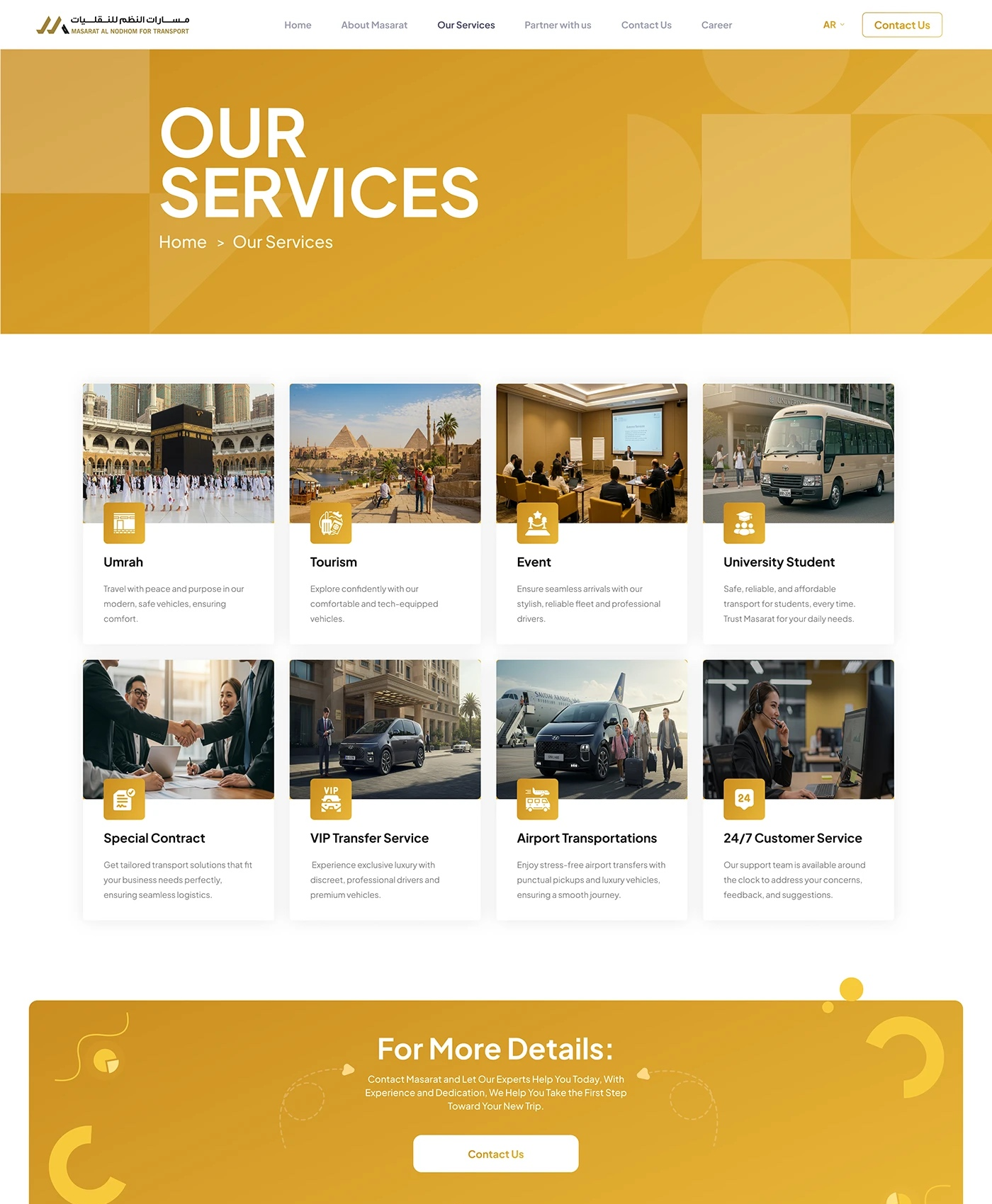
Umrah, tourism, university transport, events and transfers are named as distinct needs.
The Arabic service names carry different kinds of intent
Umrah has a cultural and practical context that a generic tourism label would flatten. University transport suggests a repeat commitment rather than a one-off outing. Airport transport has its own timing and arrival context. In Arabic, these distinctions need direct, recognisable names before they need expressive copy.
I wrote the Arabic around the service a reader is trying to arrange. The English edition has to make the range equally legible to another audience, using terms such as airport transfers, events and contract transport. The two editions share a business, but the most natural route into a service is not always the same sentence.
That is where bilingual content strategy becomes operational. A service name affects navigation, the expectation formed before an enquiry and the vocabulary a visitor brings from search. Its meaning should stay aligned across the company description, the directory and the explanation that follows.
The fleet can support the promise when its relevance is explained
The original homepage includes a vehicle range as well as service descriptions. That gives the company’s offer a tangible layer. The reader can see that different kinds of transport may call for different vehicles, rather than being asked to accept “premium” or “comfortable” as complete explanations.
The content’s role is to connect that evidence to a reason for travelling. A VIP transfer, a university journey and an event movement create different expectations of the service. The fleet presentation helps the conversation become more concrete, while the service hierarchy establishes why the vehicle matters.
The original range includes saloons, people carriers and a minibus. That gives the service portfolio more practical substance than a single premium-car image could provide. The fleet presentation and the service descriptions support each other: one establishes the occasion, the other helps the reader picture the transport being discussed.
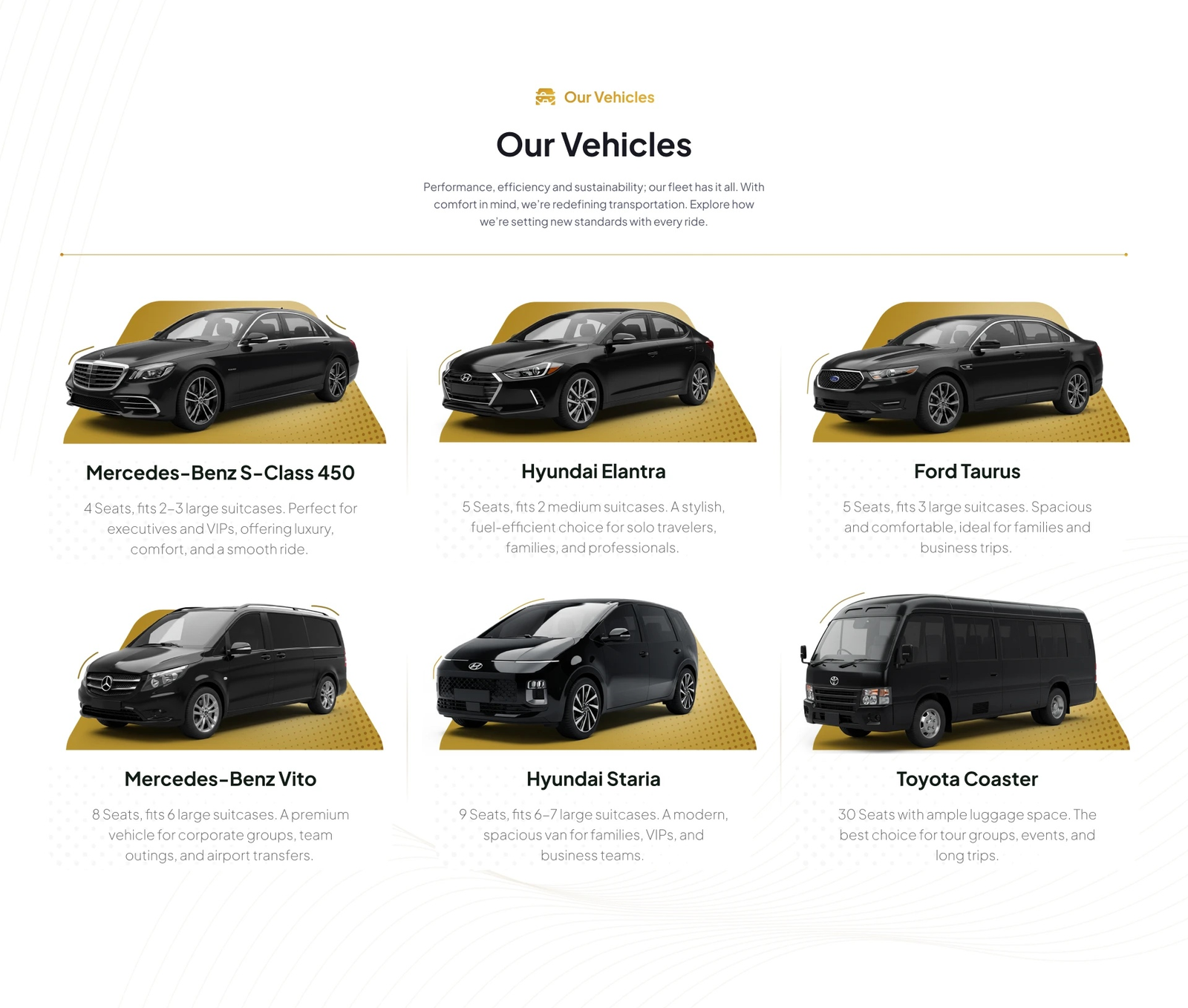
The fleet adds a tangible layer to the service explanation; availability is not asserted here.
An ongoing transport relationship needs its own route
The original site separates a general enquiry from a partnership and client-registration route. That distinction recognises a real commercial difference: arranging a particular trip and establishing an institutional relationship require different levels of discussion and commitment.
I kept the service explanations connected to that difference. The special-contract offer gives organisations a place to recognise their need, while the company pages support evaluation of the provider. The registration route can then belong to a business relationship that the content has already introduced.
The strategically useful point is the separation of buying journeys. It allows the site to serve individual passengers and organisational buyers without presenting every visitor with the same invitation. The route makes sense because of the offer around it, rather than because a longer form has been added to the website.
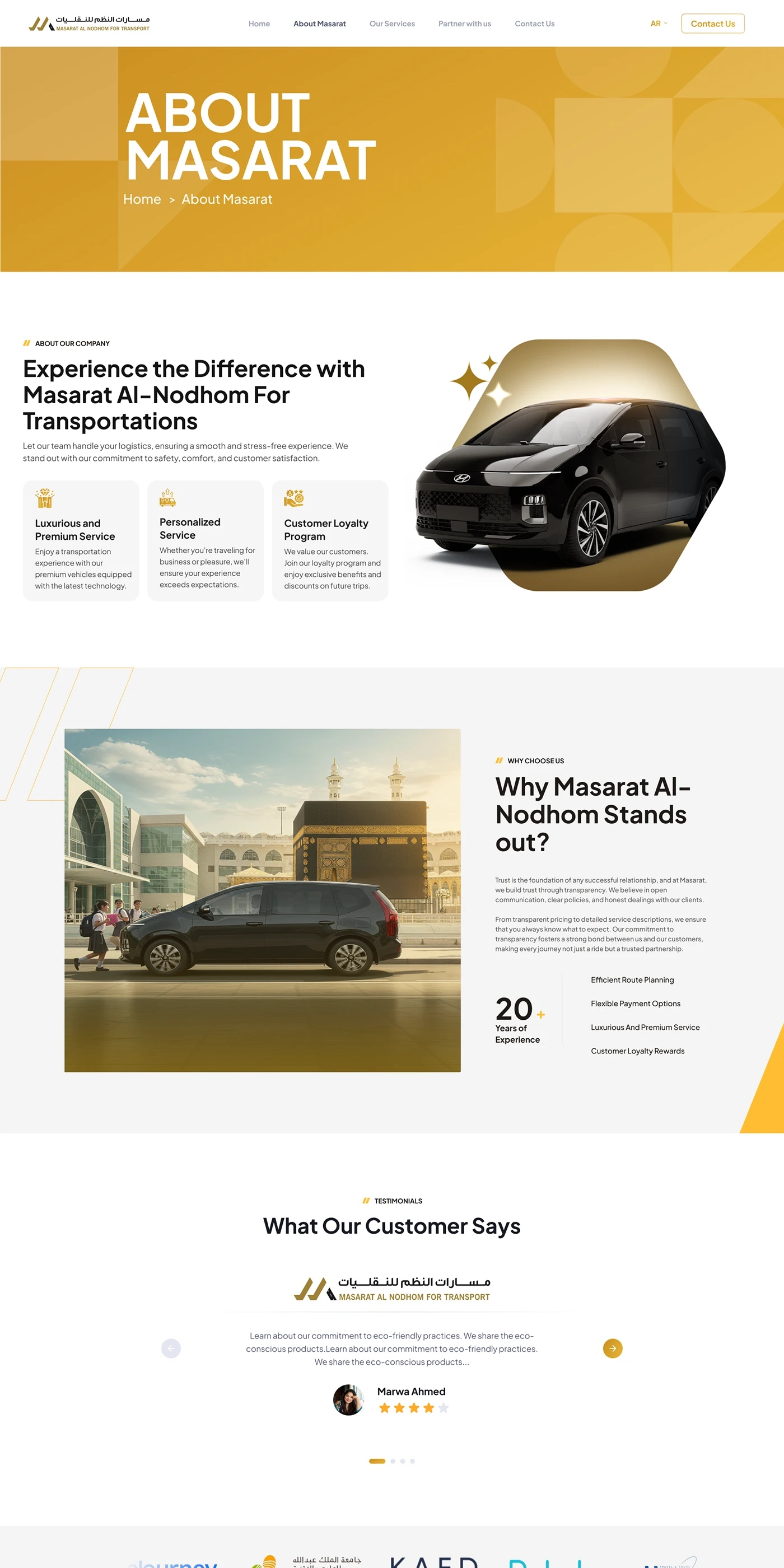
The company explanation supports evaluation beyond the individual trip.
A transport keyword can conceal a different job
When revisiting the project, I researched English and Arabic search behaviour independently. English results make airport transfers, corporate transport and individual travel services relatively visible as categories. Arabic adds locally specific service language, including university transport and the needs around Umrah.
Arabic research also exposes a semantic trap: نقل الموظفين can refer to moving people between places or transferring employees between jobs and branches. A keyword tool’s volume for the phrase cannot be accepted as transport demand without inspecting the actual results and modifiers. The content needs to name the passenger-transport job clearly.
This is why the directory’s distinctions matter to SEO as well as reading. The service vocabulary should explain what the business does and qualify who the page is for. Location coverage, pricing or a more specific operational promise should only be added when the company can support it. This present-day research informs the case-study analysis; it does not imply that those search volumes or rankings were recorded during the original engagement.
Credibility comes from the relationship between the parts
The company explanation, service range, fleet and institutional route all contribute something different. Together they let a visitor ask a more useful question: can this provider organise the kind of transport I need? The content’s job is to make that evaluation easier through a coherent account of the business.
The finished work is a bilingual transport website whose service architecture reflects the occasions and relationships it is intended to support. That is the contribution I can demonstrate through the original materials: the commercial hierarchy, the language of the offer and the connection between a visitor’s need and an appropriate conversation.
Other language editions and supporting screens
Original evidence selected for comparison and a fuller view of the work. Open a screen to read the full-size export.
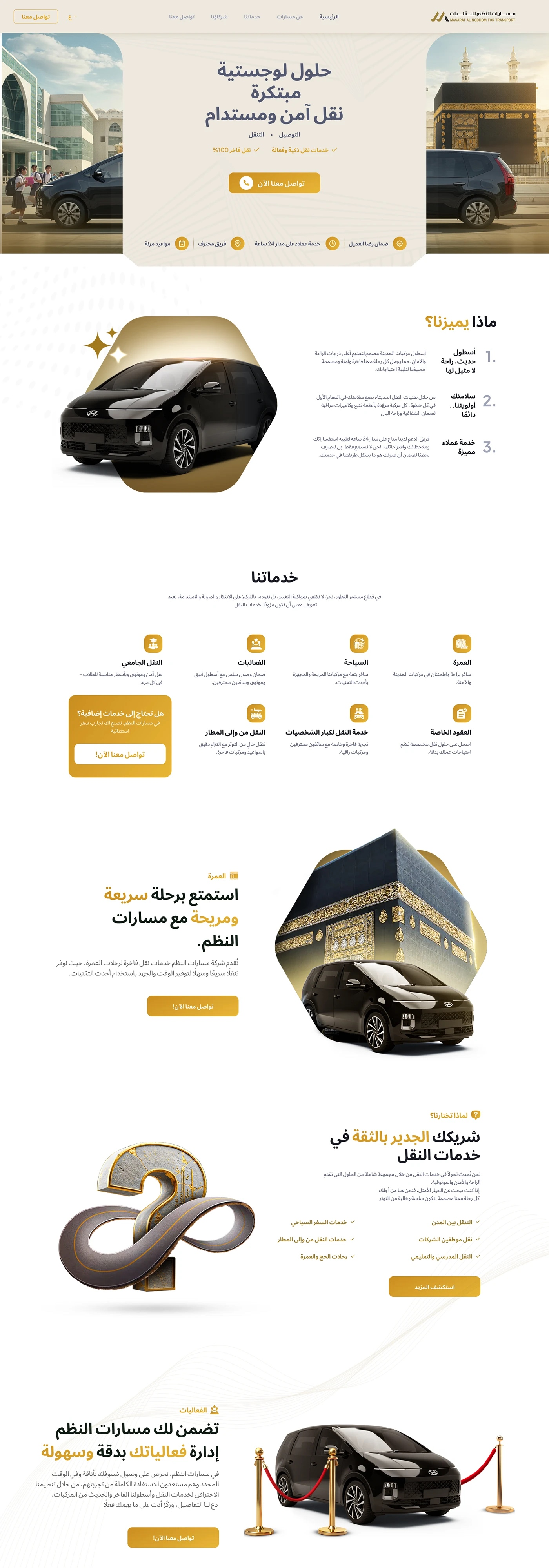
The company proposition leads into the occasions and services it supports.
Scroll either edition and the other follows, section by section.
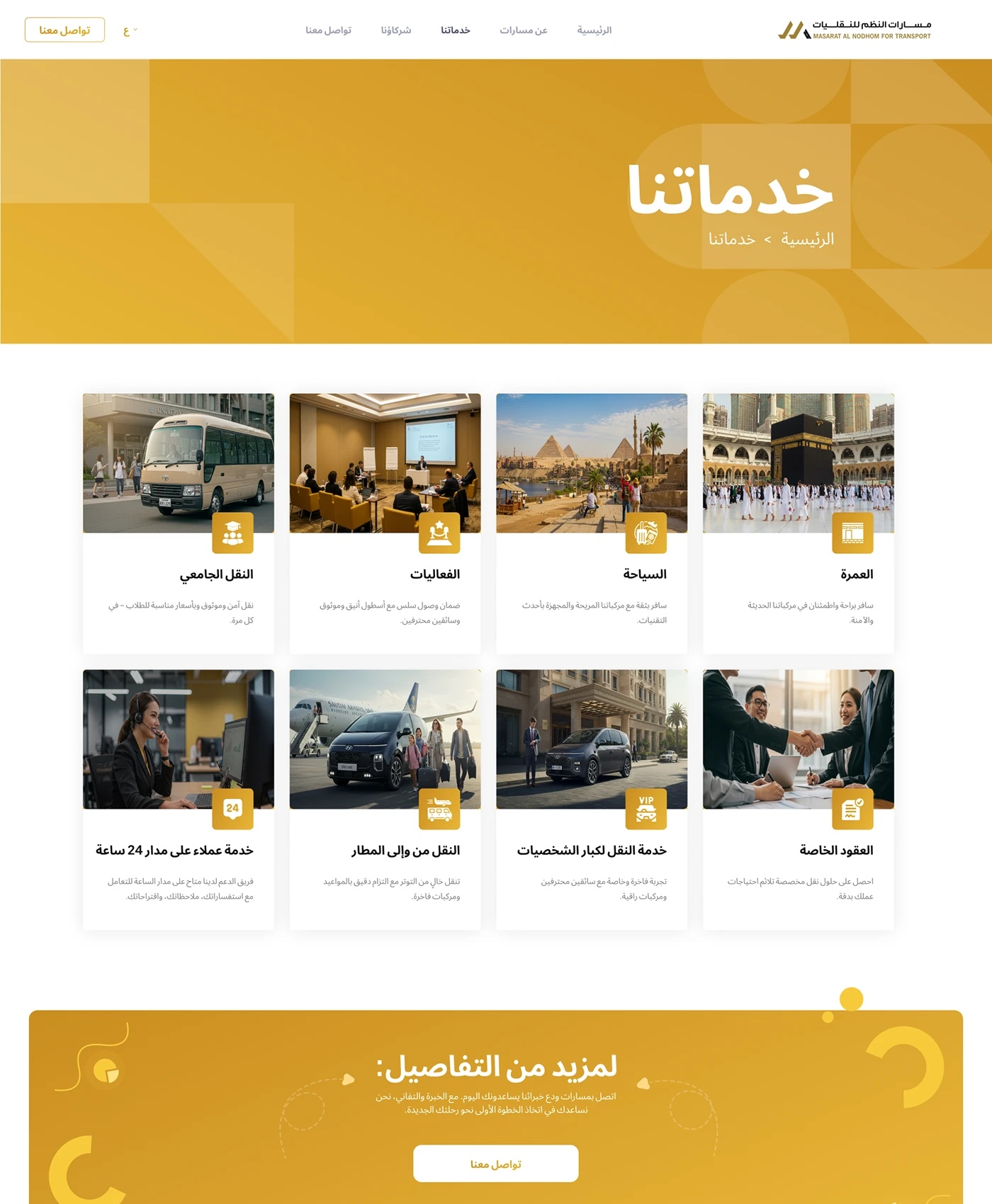
Umrah, tourism, university transport, events and transfers are named as distinct needs.
Its counterpart appears in The service portfolio gives the company proposition a usable shape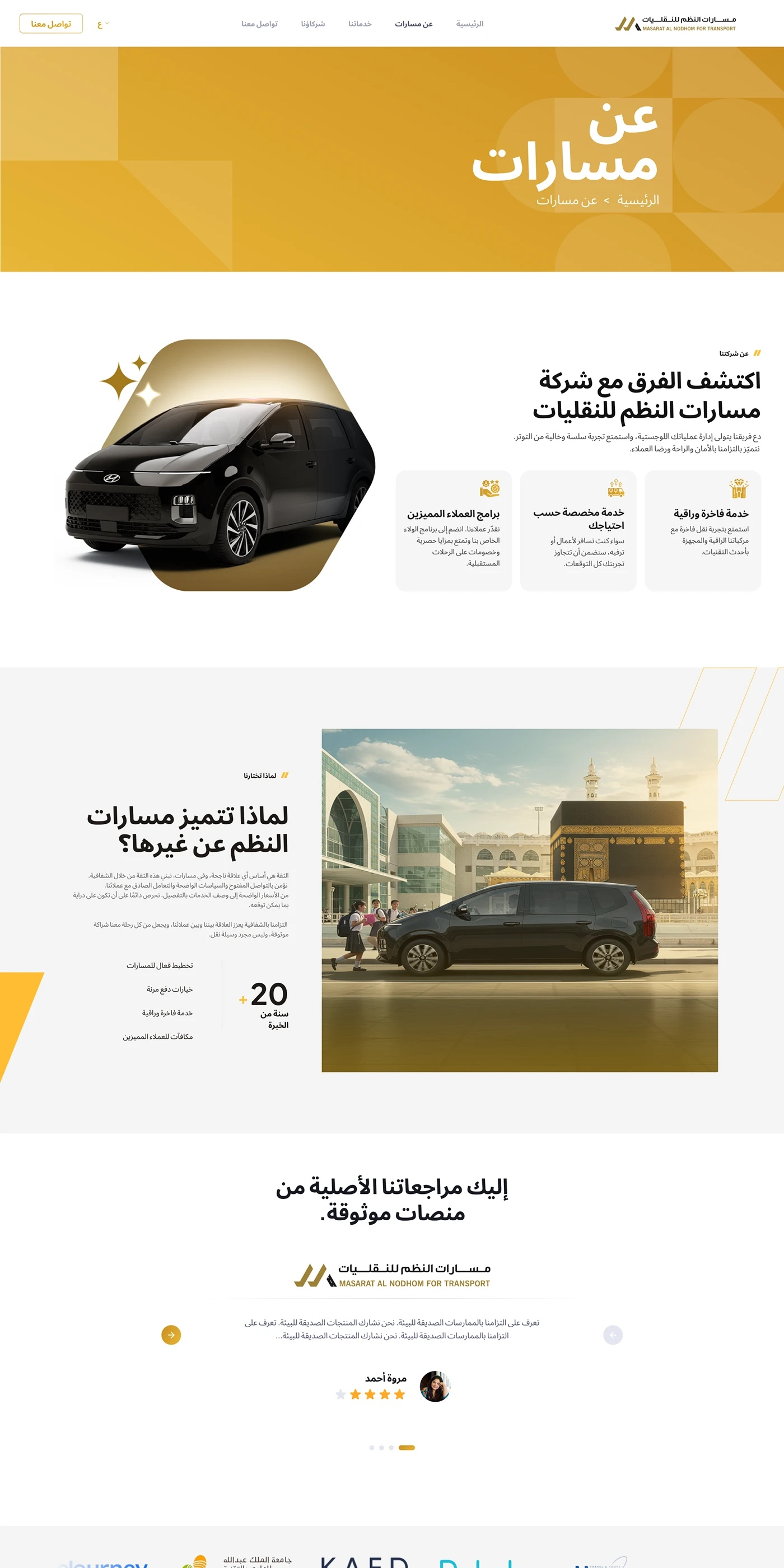
The company explanation supports evaluation beyond the individual trip.
Its counterpart appears in An ongoing transport relationship needs its own route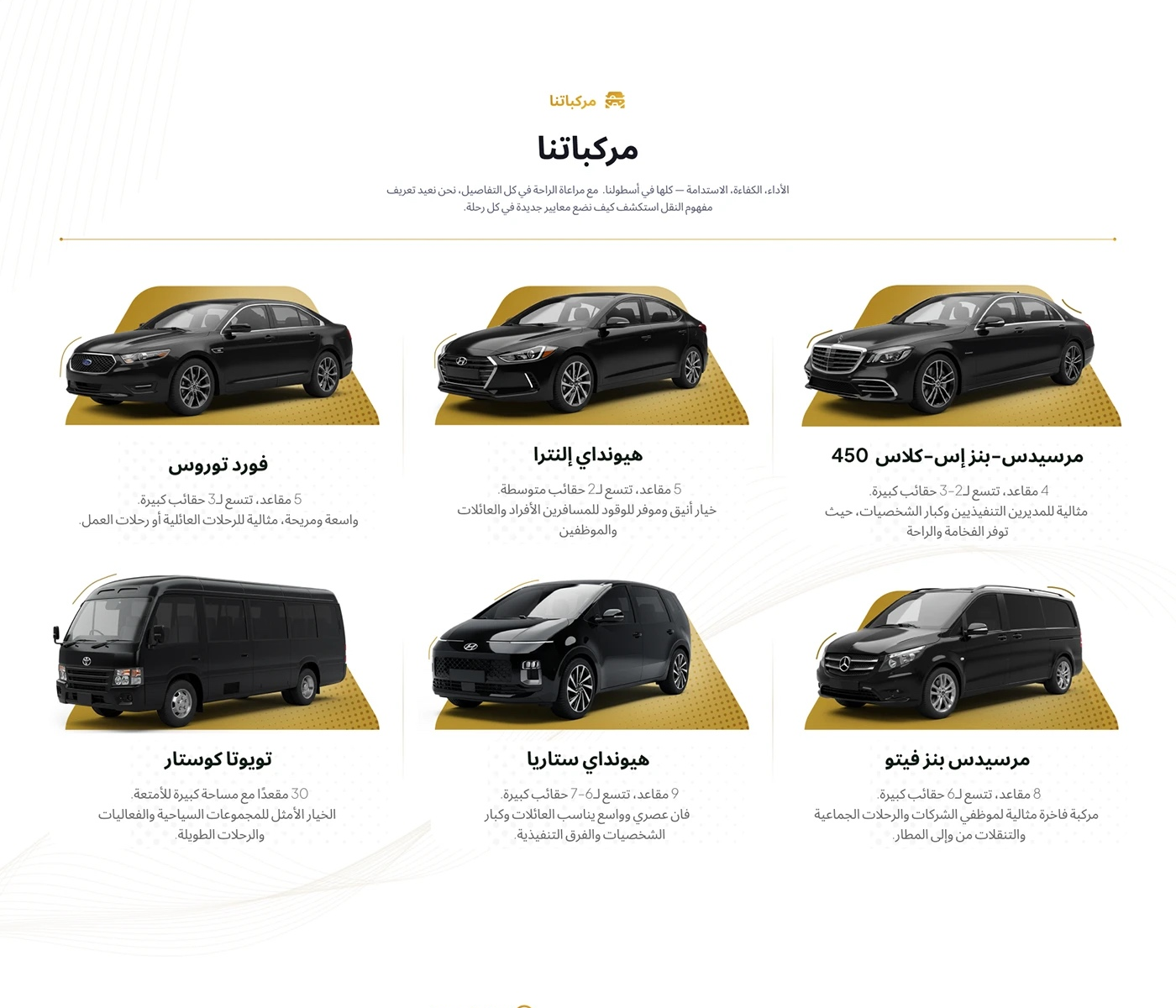
The fleet adds a tangible layer to the service explanation; availability is not asserted here.
Its counterpart appears in The fleet can support the promise when its relevance is explainedScreens document the content and its presentation. Prices, ratings and numerical claims within the original designs are not measured outcomes of this engagement.