“Transport” is too broad a word
“Transport” does not describe what an airport passenger, an Umrah organiser or a university administrator needs. Each has a different route, a different level of commitment and a different enquiry.
Name the services before asking for contact
The English and Arabic homepage and service pages introduce the company, then name specific services. A visitor can find the right context before contacting the operator, which is also how someone arriving from search, deep in the site, knows they have landed in the right place.
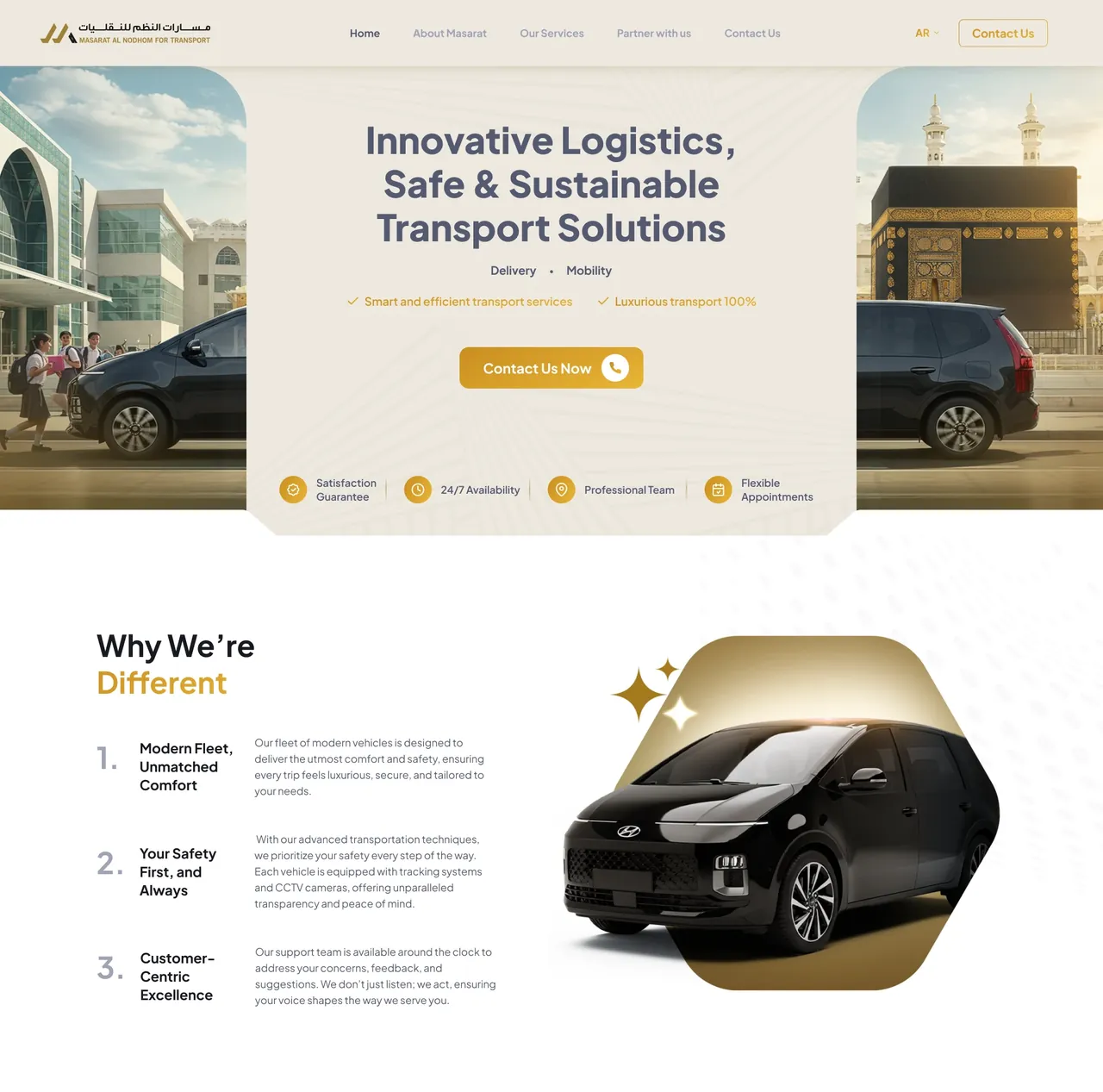
The opening frames the company and leads into specific transport needs.
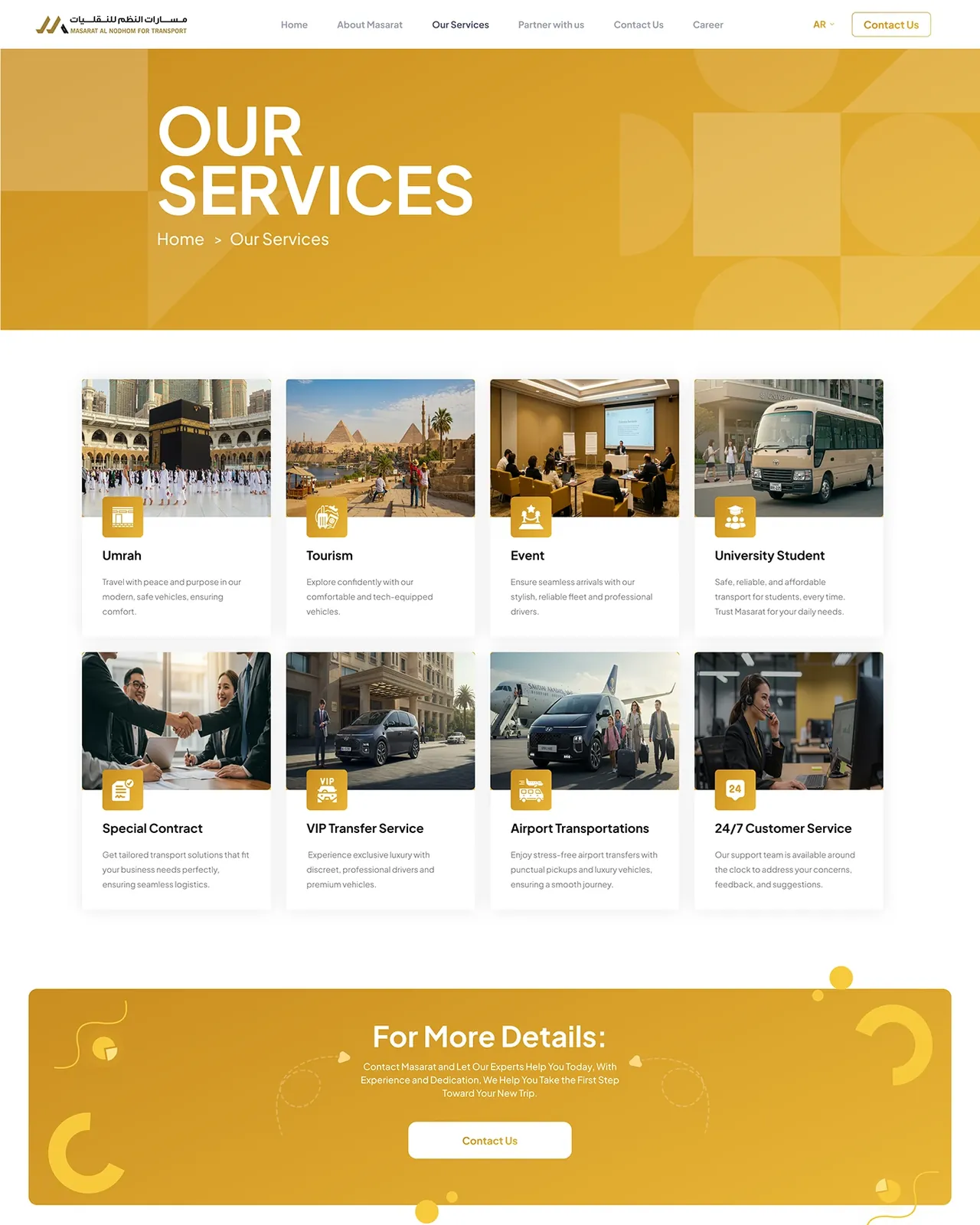
The service map makes different visitor needs scannable.
The company story gives every service a home
The About page carries the company’s history and context, so the service pages can stay focused on the trip. For search, it is the natural answer to a brand query and the page every service can point to for credibility.
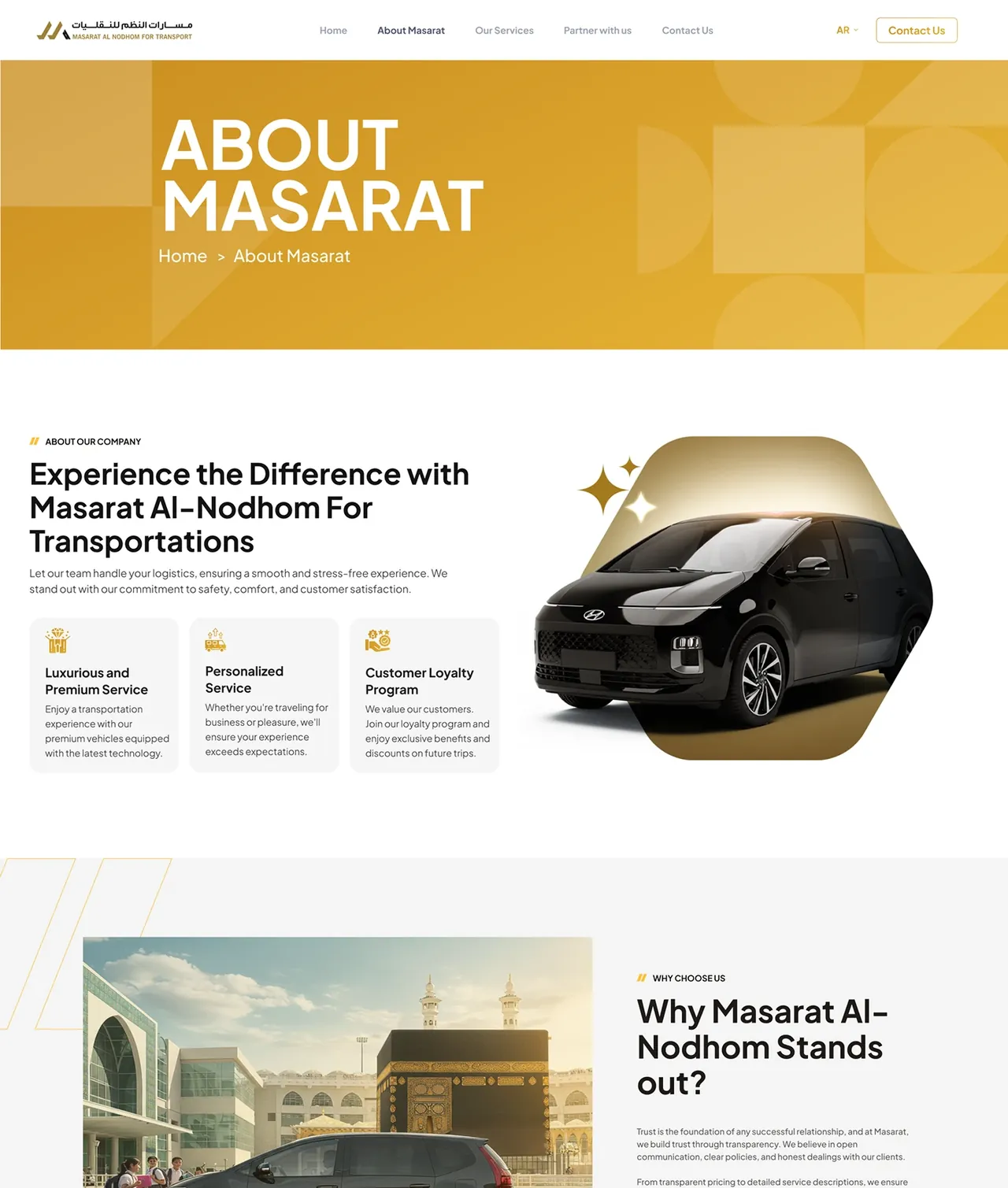
The company context has a dedicated place.
English and Arabic searches do not share one phrase
English searches for airport transfers name Saudi cities such as Jeddah and Madinah, but the same broad phrase also covers airports abroad, so its search volume says little about Masarat’s market. The useful distinction is a specific passenger journey versus a company-level transport query.
Arabic needs its own reading. The site names العمرة, النقل الجامعي and النقل من وإلى المطار. نقل الموظفين can also mean an employment transfer between employers, and النقل الجماعي is mostly about stations, tickets and operator names. Neither belongs on a contract-transport page unless the wording makes the meaning clear.
نقل المعتمرين is more specific: Umrah transport is a distinct service with its own buyers and questions. That supports a focused Umrah explanation with its own enquiry path.
Separate the trip from the institutional path
Client Registration gives organisations a destination beyond a general contact form. It supports a service page; it is not a landing page for transport searches. The service page explains the passenger need and its scope, and registration follows.
| The reader wants | What the page should settle | The next step |
|---|---|---|
| Airport transfer | Pickup context, destinations and service conditions | A trip inquiry. |
| Umrah or university transport | Group or recurring transport requirements | A service-specific discussion. |
| Organizational partnership | Company relationship and qualification | Client registration after relevant context. |
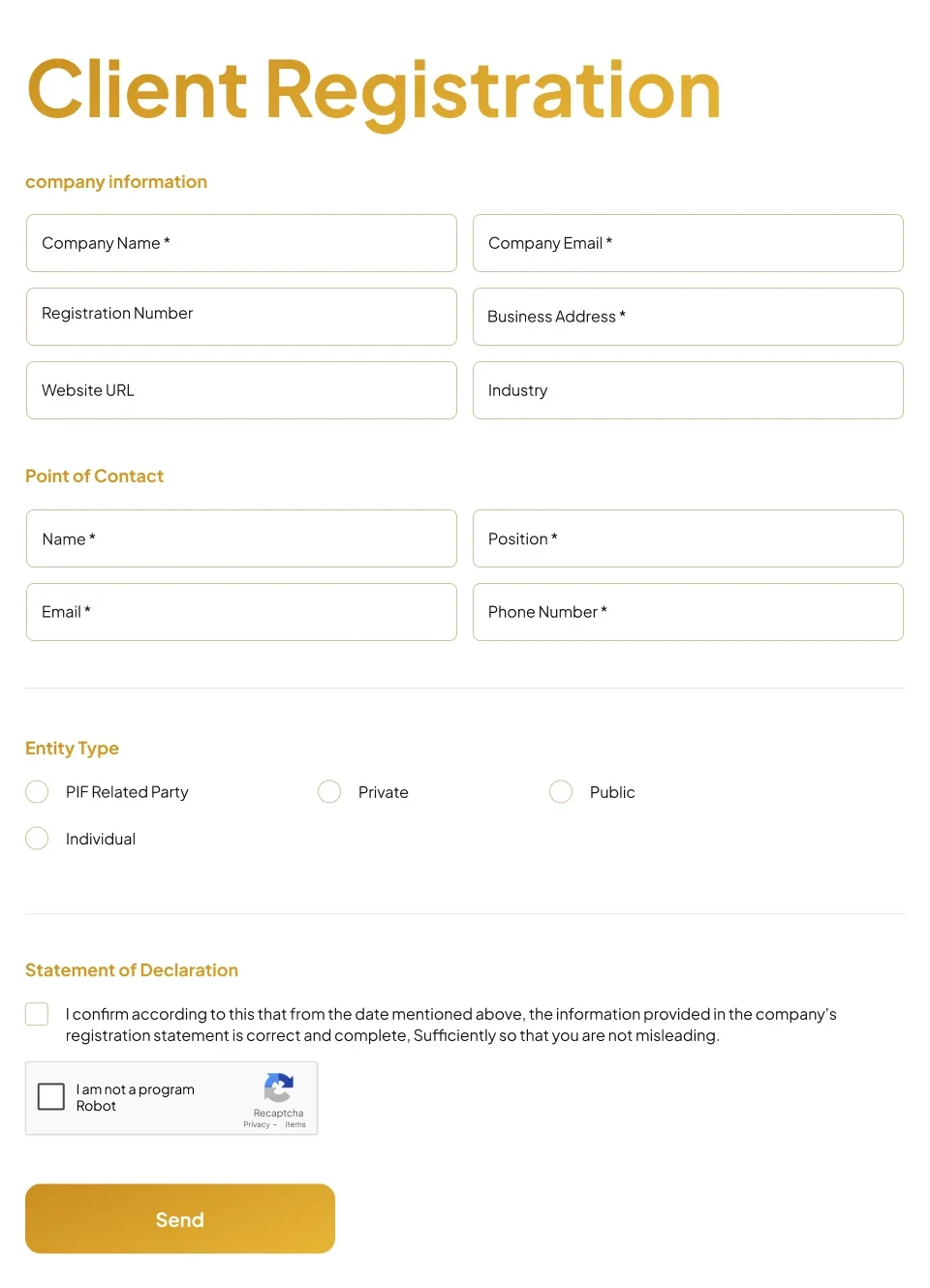
Client registration groups company details, a named contact and the type of organisation, a different conversation from a one-off trip enquiry.
Arabic page titles should say which passengers move
A page title or introduction should say which kind of passenger movement it covers. For an organisational service, mentioning groups or scheduled journeys separates road transport from an administrative transfer. The final wording has to match what Masarat actually offers.
Place names deserve the same discipline. A city or airport page earns its place only where the operator can confirm coverage and say something useful about that place. The same company paragraph under several city names would not answer the traveller’s question.
Follow the path all the way to the enquiry
The service map should lead to the right explanation, and that explanation should name the enquiry the reader is starting. Registration stays an institutional path: sending every search visitor there would ask passengers for information that has nothing to do with their trip.
A practical handoff pairs each English and Arabic service page with its heading, metadata, crawlable navigation and the right enquiry destination, then checks the reciprocal language links and equal scope. Once Search Console is connected, it shows which services people actually find.
What I would fix next
The site sets the right language and direction and links to every service. The next step I would take is technical: a distinct title and description for each page, canonical and hreflang links between the two languages, and the main H1 in the opening of the page rather than further down.
A service map search can read
The content map gives each transport need its own route. Clearer titles, descriptions, headings and language links would let search engines see the same distinctions that visitors already can.