CAMELO SaaS
Explaining what a transport platform lets a business operate
CAMELO’s original portfolio concept combined fleet-management software with a white-label ride-hailing offer. I worked on its business and content strategy, search-aware solution structure and English/Arabic UX writing, connecting the platform proposition with the decisions a transport operator needed to make.
Business and content strategy, search-aware solution architecture, English and Arabic website copy and UX writing for the original concept.
Original portfolio concept. The version presented here was not launched after my engagement.
The project at a glance
CAMELO’s original concept presented fleet-management software and white-label ride-hailing technology to transport businesses. This portfolio records the English and Arabic product communication developed during my engagement.
StatusPresented version, not launched after my engagement
- Market
- Saudi Arabia
- Project type
- Mass transportation website · Presented concept
- Languages
- English · Arabic
Scope
- Offer architecture
- Content strategy
- Bilingual UX writing
- Search-aware solution structure
Deliverables
The commercial and content structure for the original concept, with English and Arabic homepage content, a search-aware solutions directory, detailed fleet pages and a distinct white-label ride-hailing offer.
Select a screen to open the full-size image.
The same technology supports different commercial decisions
A transport operator assessing software wants to understand how it will help run vehicles, people and costs. A business exploring a branded ride-hailing service is asking a different question: what technology would let it operate that service under its own identity? CAMELO’s materials contain both propositions.
My work was to explain that range through content strategy, solution-page structure and English/Arabic UX writing. The challenge was to connect technical capabilities with a commercial reason to investigate, while keeping the reader’s operating role clear.
A platform becomes legible through the problems it organises
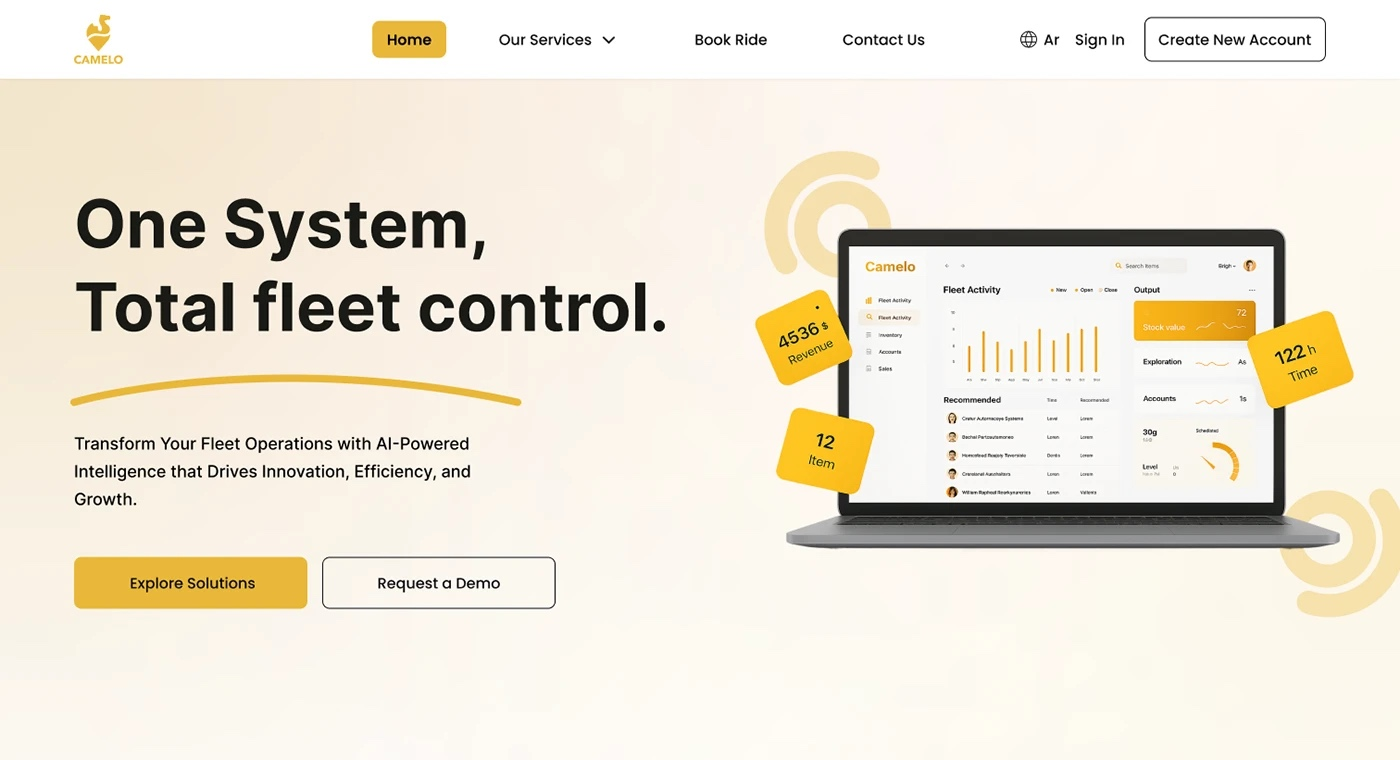
The homepage introduces fleet control and a broad capability set. The solution directory then gives readers more specific routes into real-time intelligence, maintenance, driver performance, sustainability and enterprise integration. These are recognisable areas of responsibility within a transport business.
I used that progression to keep the overview useful without asking it to explain every capability in depth. Someone concerned about vehicle downtime can follow the maintenance argument; someone responsible for drivers can examine the safety and performance material. The directory works as a decision surface when its descriptions make those differences understandable.
The original homepage and directory do not use an identical taxonomy throughout. Reading them together makes an important strategy distinction visible: a feature inventory describes what a platform contains, while a solution architecture groups the reasons a business would consider it. Clear writing has to connect those two levels.
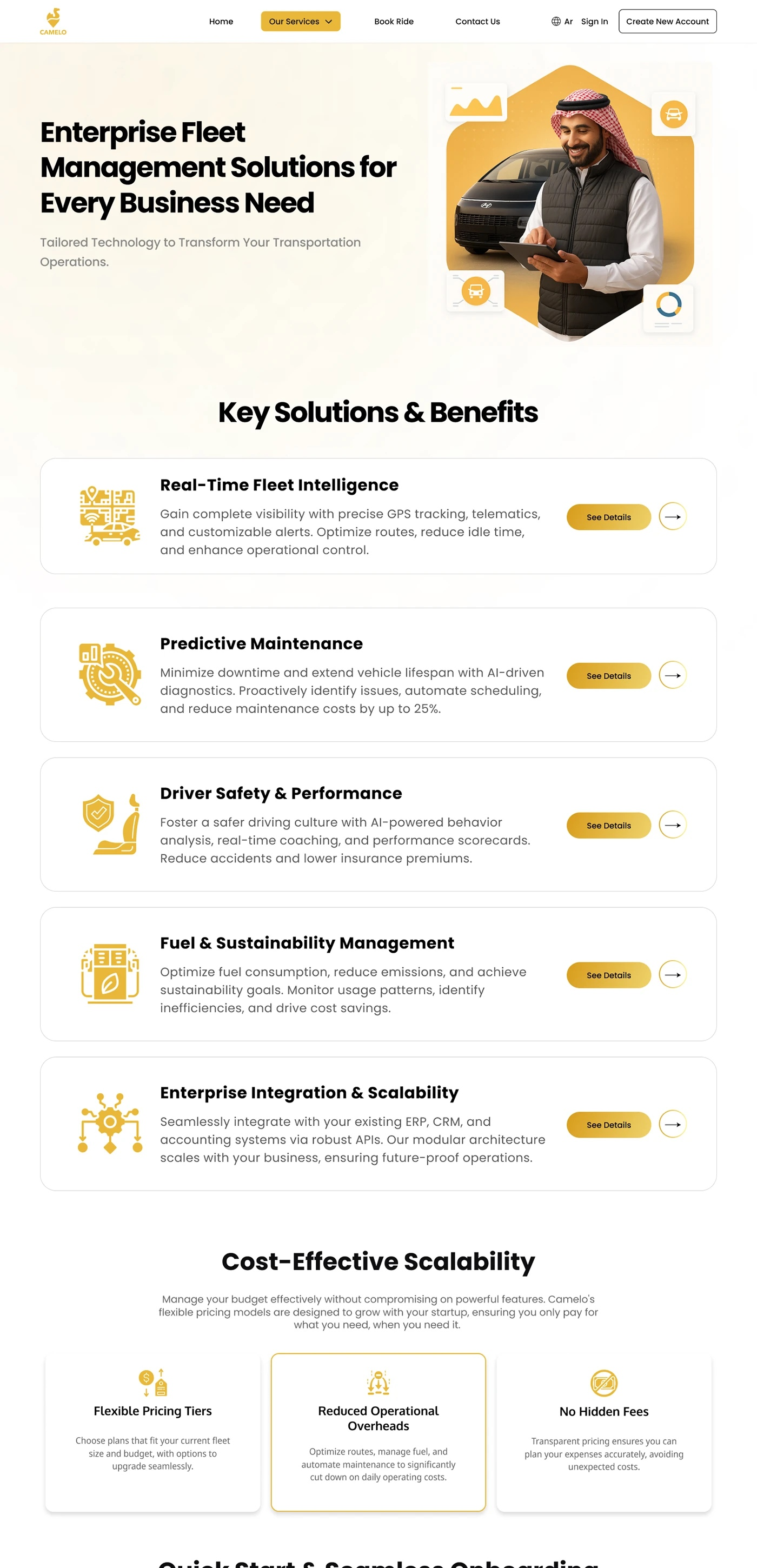
The directory gives different operating concerns their own entry points.
The solution page carries the case for relevance
Each detailed explanation moves from the operating problem to capabilities and then to the proposed business value and implementation approach. The repeated frame gives the reader a way to compare solutions. The content inside it has to earn that comparison with specific subjects.
Real-time fleet intelligence deals with visibility, tracking, alerts, a command centre and reporting. Maintenance deals with component condition, scheduling, service history and parts. Both can sit inside one platform, but they support different decisions and different working routines.
This is the level where I concentrated the product writing. A phrase such as “predictive maintenance” needs enough explanation for someone to understand what is being monitored and what action the information is meant to support. A benefit without that connection would leave the buyer with another promise to interpret.
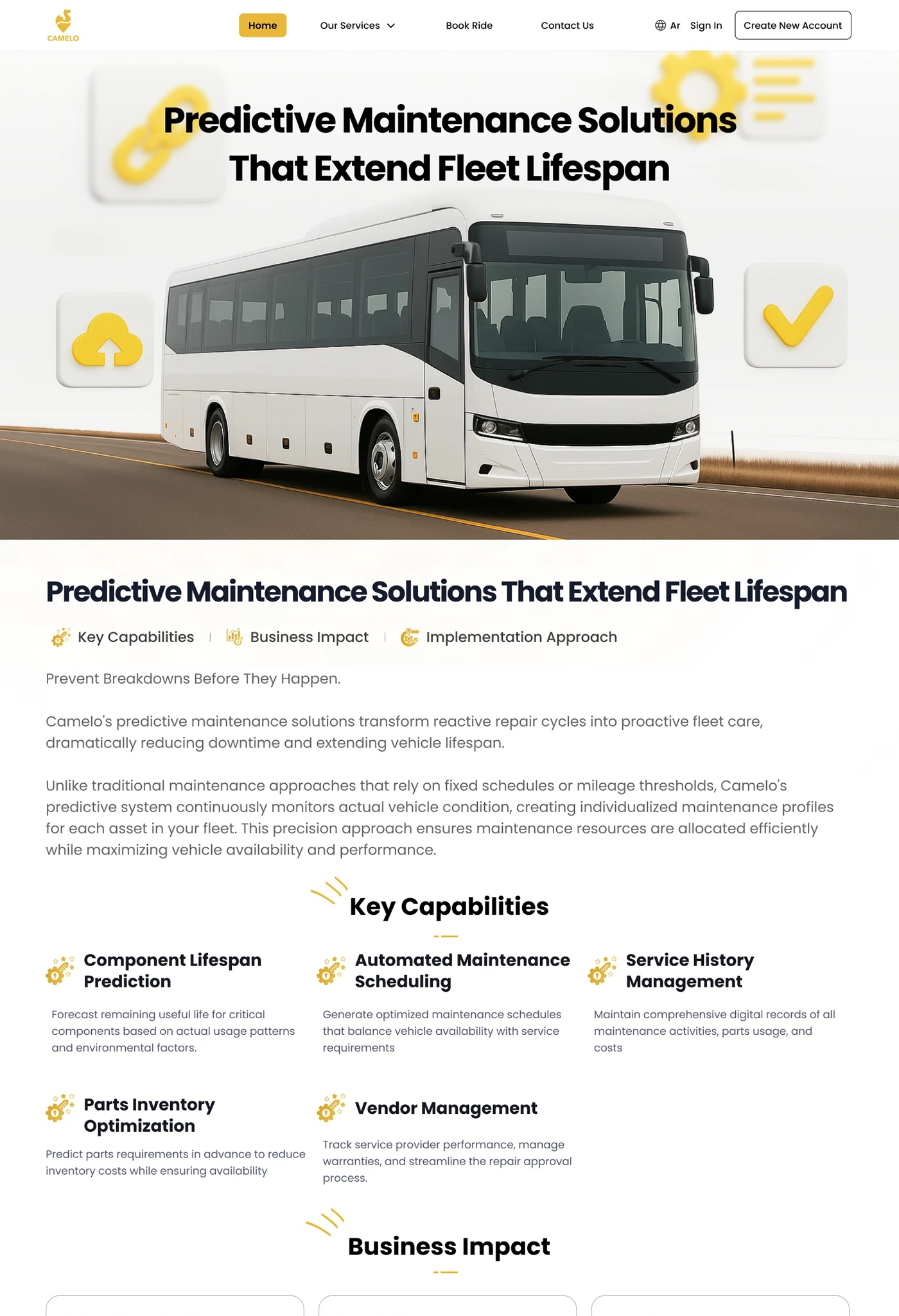
Maintenance has its own account of condition, scheduling and service history.
Driver performance needs the vocabulary of an operating team
The driver-management material makes an abstract safety proposition more concrete through coaching, real-time feedback, scorecards, video telematics and certification tracking. Those concepts belong to different tasks: intervening during a journey, reviewing patterns afterwards, and maintaining records that support fleet operations.
Separating those tasks helps a buyer understand the scope of the explanation. A scorecard is useful because it gives performance a form that can be reviewed. Coaching describes a response to that information. Certification tracking concerns an administrative responsibility. Grouping them under one headline should not erase their different jobs.
The writing therefore has to move between technical capability and operational meaning. I developed the page content in both languages so the explanation could go beyond a heading such as “driver optimisation” and give the reader a more specific basis for evaluating the offer.

Coaching, scorecards and records explain different parts of the driver-management job.
The white-label offer changes what the buyer is buying
The white-label page introduces rider and driver applications together with an administrative portal. It then explains branding, language support, business models, vehicle categories and payment integrations. That is a broader commercial proposition than buying a tool to monitor an existing fleet.
The content needs to answer what the prospective operator can make its own and what the platform is intended to supply. Branding is one part of that answer. The relationship between passenger-facing applications and the operational system is more consequential, because the business has to understand the service it would be responsible for running.
The page has to hold two levels of evaluation together: control over the service’s identity and operating choices, and an understanding of the shared technical foundation. Its structure lets an operator examine the ecosystem before moving into commercial terms. That is the strategic value of explaining the layers together instead of treating custom branding as the entire proposition.
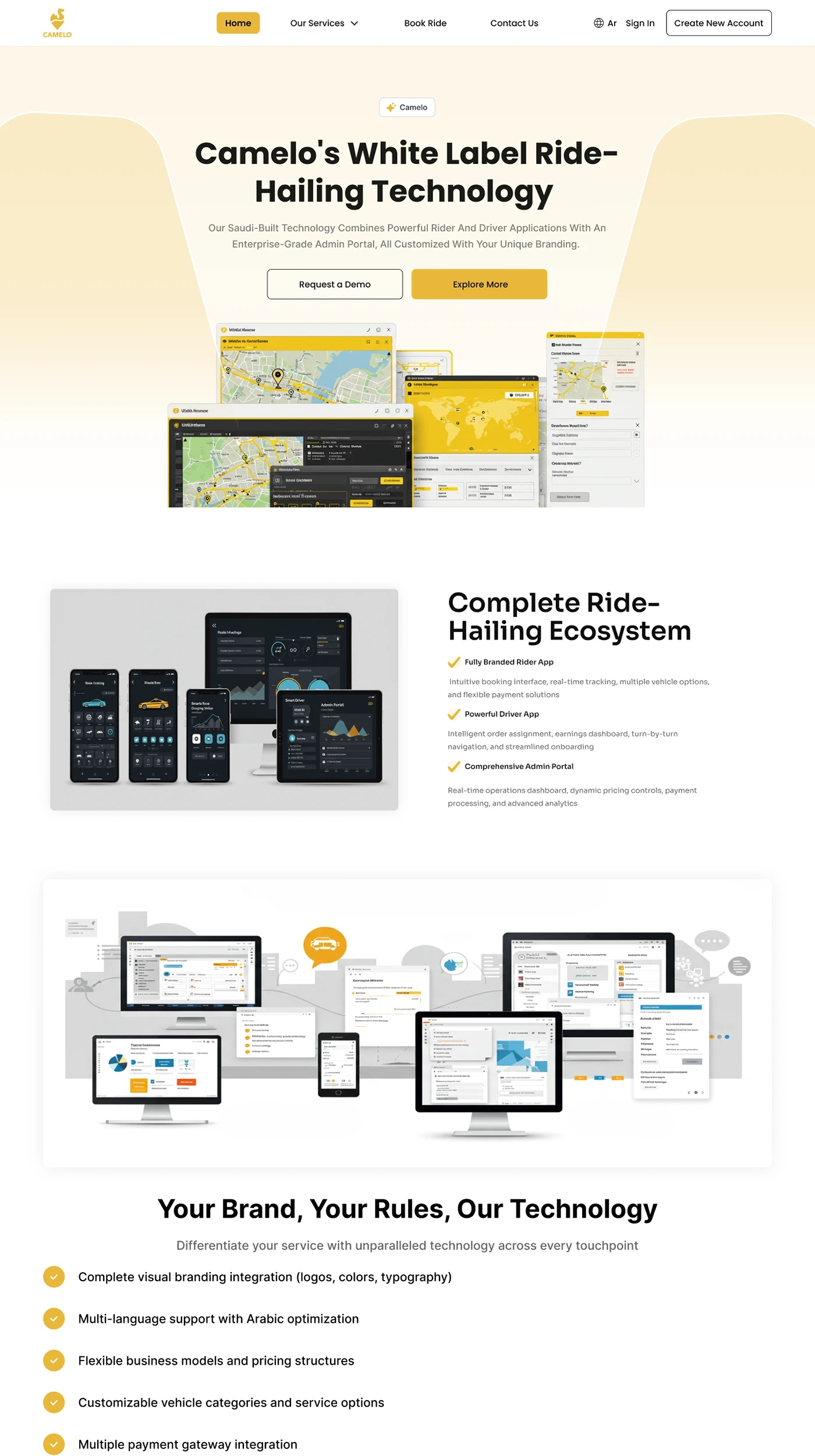
Rider and driver applications, the admin layer and customisation explain the operator’s proposition.
Search structure follows the distinction between the offers
The SEO part of this work connects the way buyers name their needs with the way the website organises its explanations. Fleet-management software, driver management and vehicle maintenance concern an existing operation. A white-label ride-hailing platform concerns the technology for a service an operator wants to run under its own brand. Those questions need distinct destinations and a clear relationship to the platform.
I treated the solution directory and detailed pages as a connected content structure. The overview establishes the broader category; the solution names identify specific responsibilities; each detailed explanation develops the operating problem, capabilities and commercial relevance. This gives a page a recognisable subject without making every destination repeat the whole offer.
That is where SEO and Business Architecting meet in the project: the commercial distinctions guide the page structure and its language. The presented version was not launched after my engagement, so these deliverables should be assessed as strategy and content work. They do not establish rankings, search traffic or live technical implementation.
Arabic distinguishes the operating system from the transport service
Arabic introduces its own category questions. إدارة الأسطول concerns managing vehicles and their operation. إدارة السائقين narrows the subject to people, performance and records. A branded ride-hailing platform belongs to another explanation, with a business building a service for its passengers.
I wrote these pages with that distinction in mind. The Arabic needs to explain what a capability enables and who uses it, rather than rely on an English technical name in Arabic characters. The white-label proposition is easier to understand when the copy explains ownership of the brand experience and the technology behind it.
The original pairs show the breadth of the localisation work across the directory and detailed pages. They also make the writing inspectable: a reader can compare the way a fleet problem is introduced, how capabilities are grouped and what the next conversation is expected to concern.
An original product story, preserved on its own terms
The deliverable was a bilingual system of explanations: a platform introduction, a solution directory, detailed fleet pages and a distinct white-label proposition. Together they let a reader examine how I turned a wide technical offer into subjects a transport business could investigate.
The version shown here remains the original portfolio concept. The former CAMELO domain subsequently led to Masarat’s transport website, which is a separate project and cannot demonstrate implementation of this fleet concept. Keeping those records apart lets the work be judged accurately.
Other language editions and supporting screens
Original evidence selected for comparison and a fuller view of the work. Open a screen to read the full-size export.
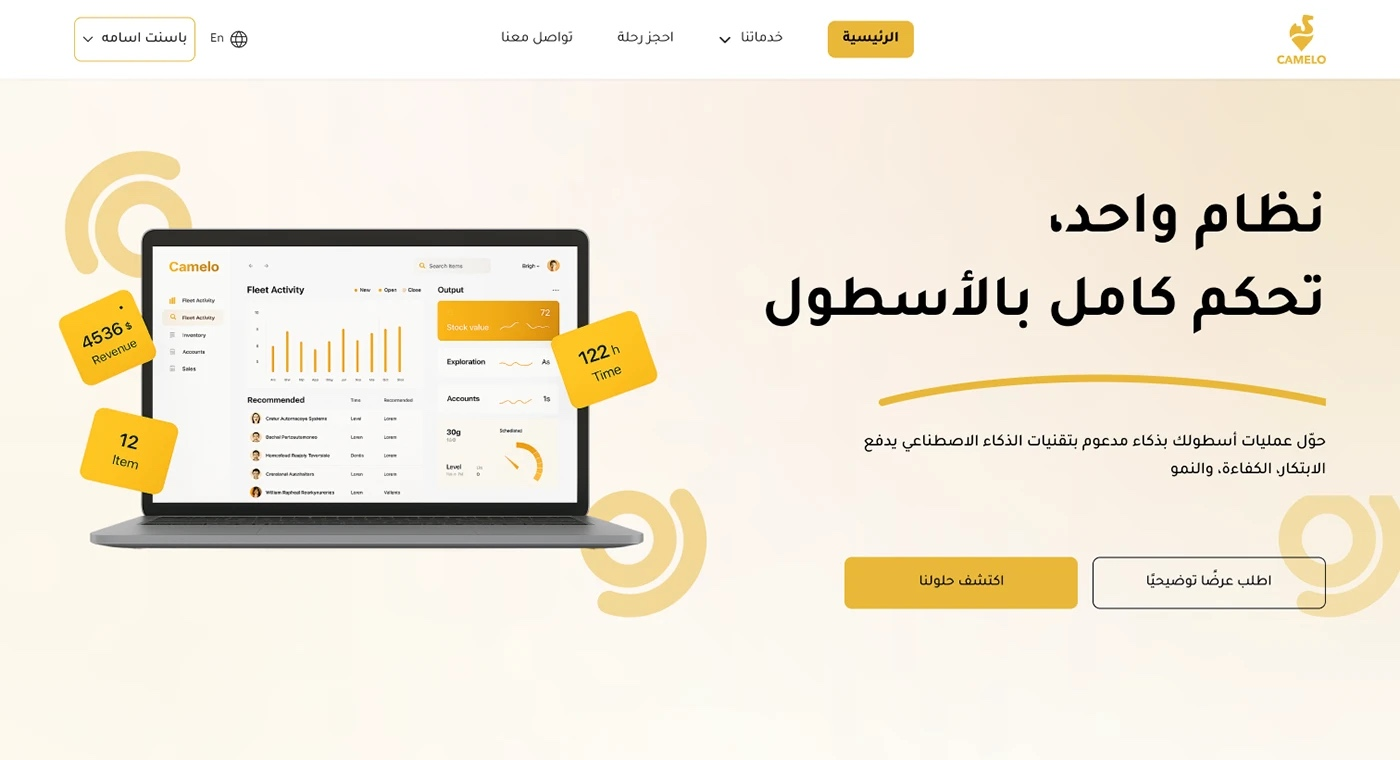
The original opening positions the offer around operating and controlling a fleet.
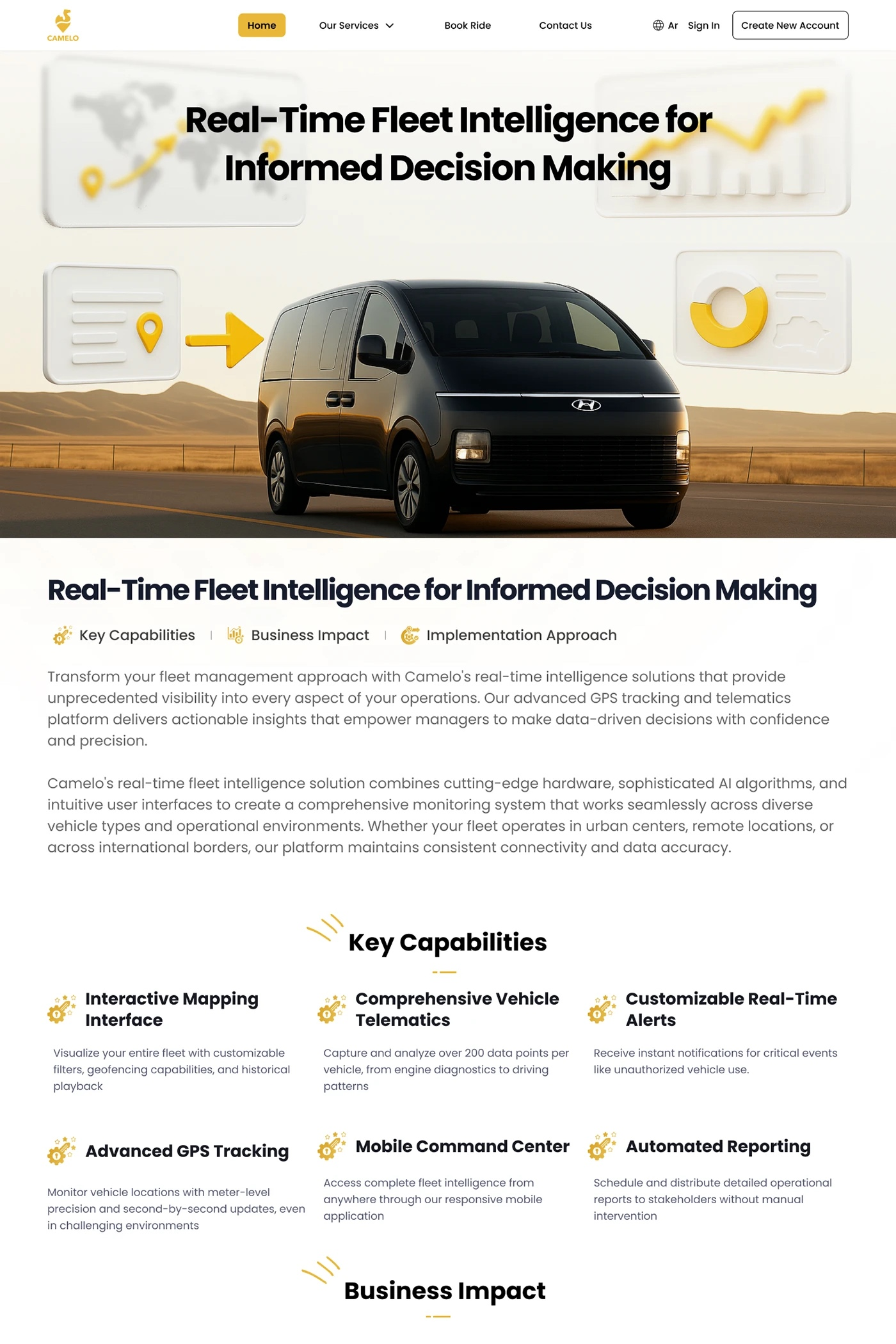
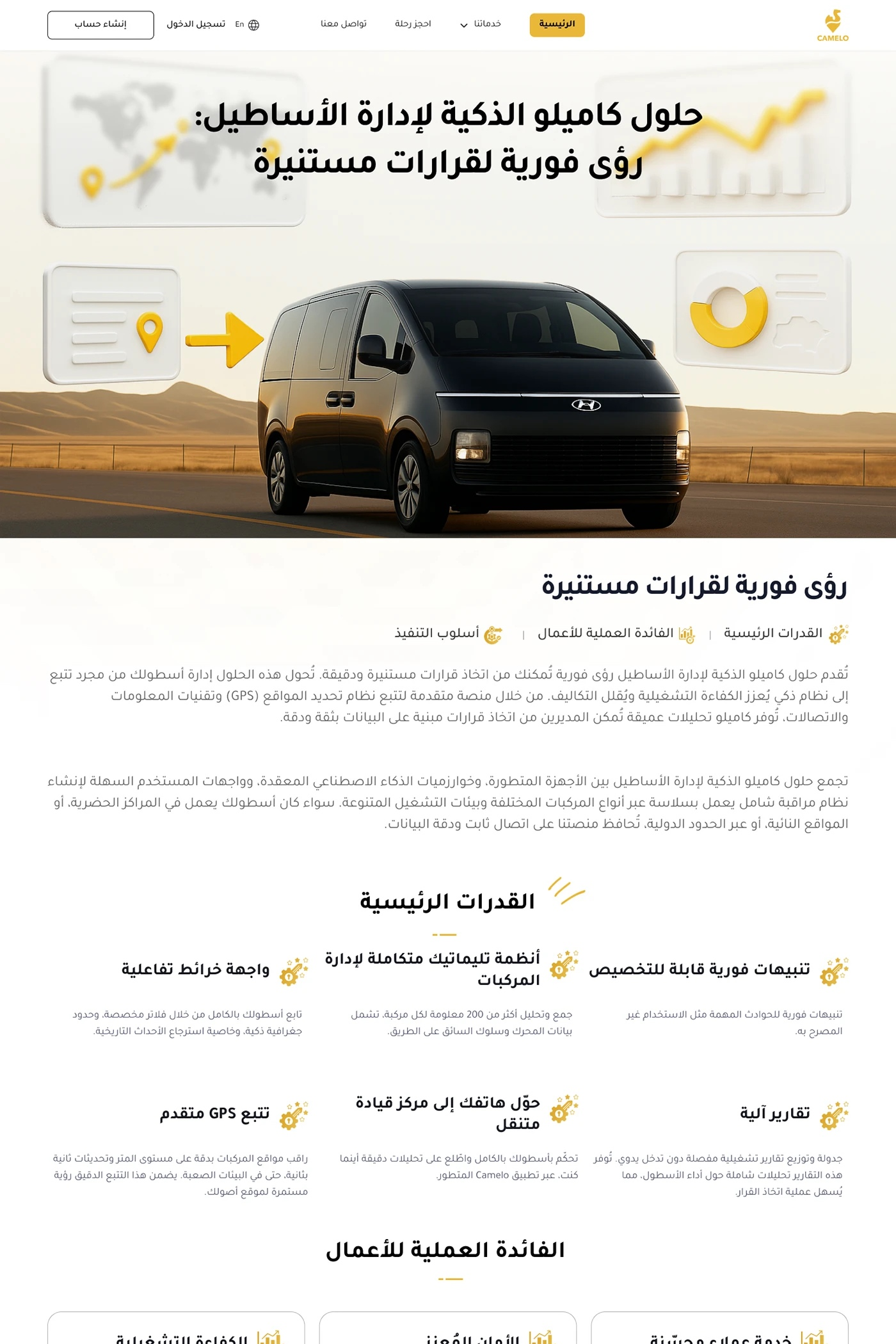
Tracking, alerts and reporting turn fleet visibility into identifiable subjects.
Scroll either edition and the other follows, section by section.
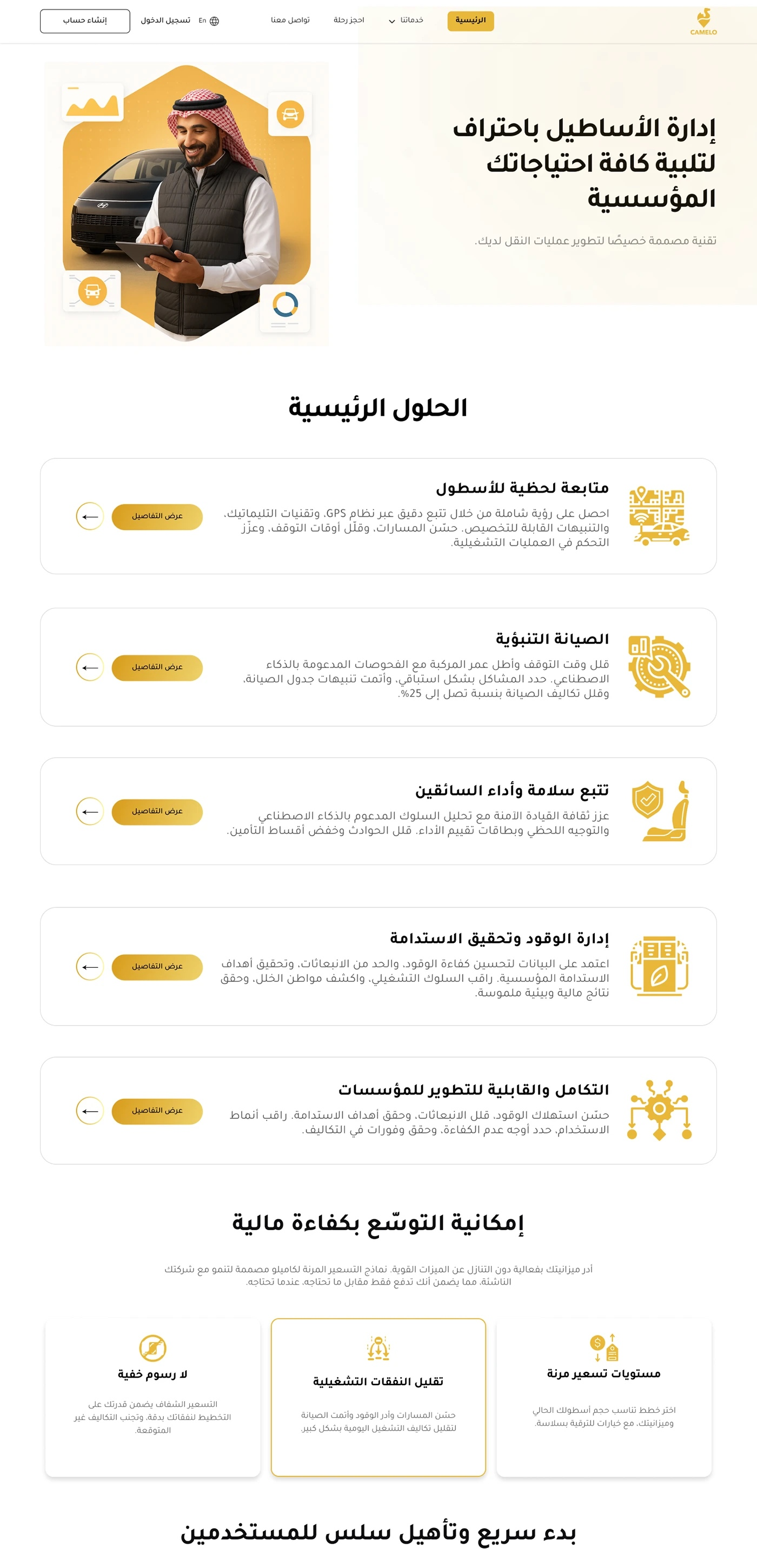
The directory gives different operating concerns their own entry points.
Its counterpart appears in A platform becomes legible through the problems it organises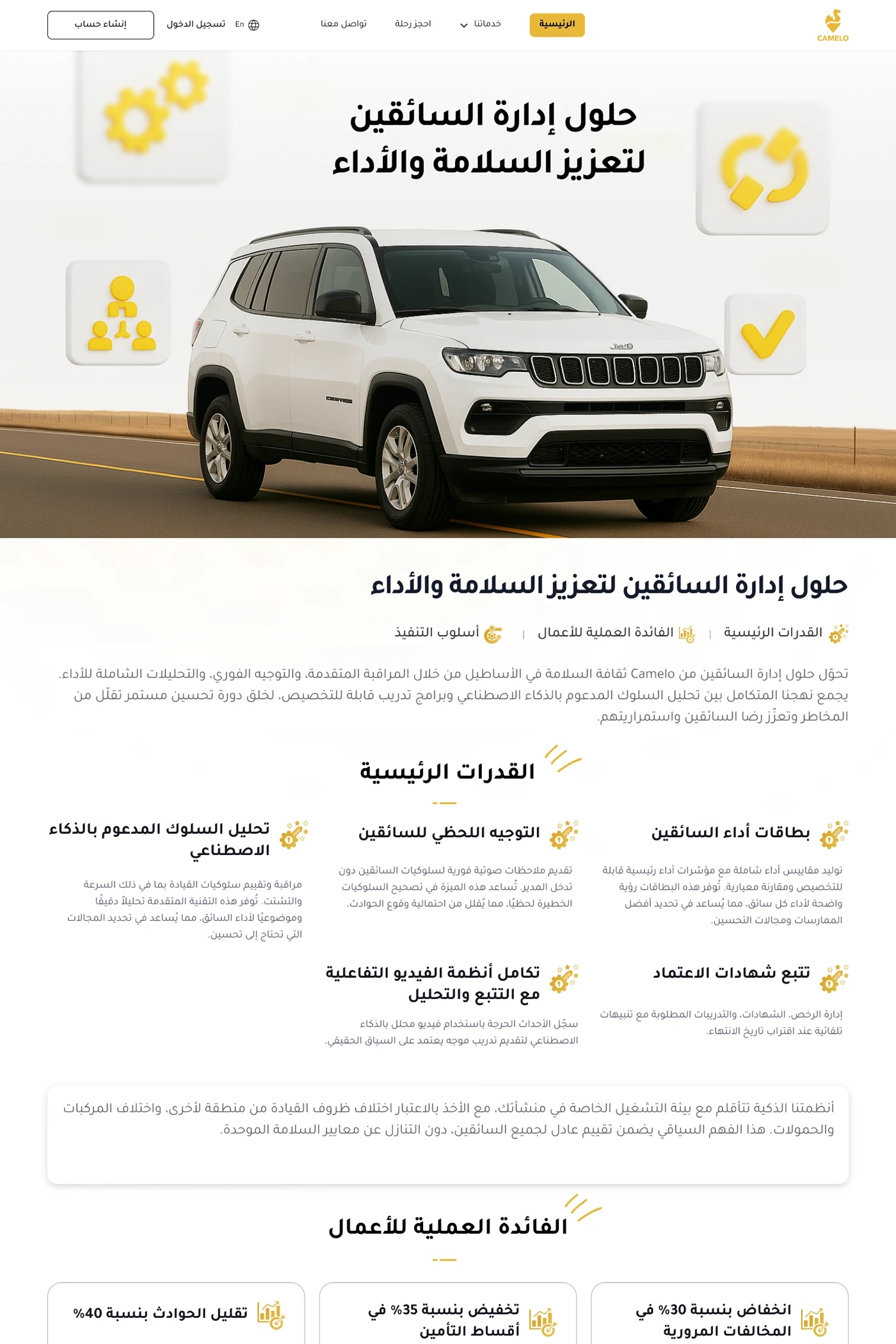
Coaching, scorecards and records explain different parts of the driver-management job.
Its counterpart appears in Driver performance needs the vocabulary of an operating team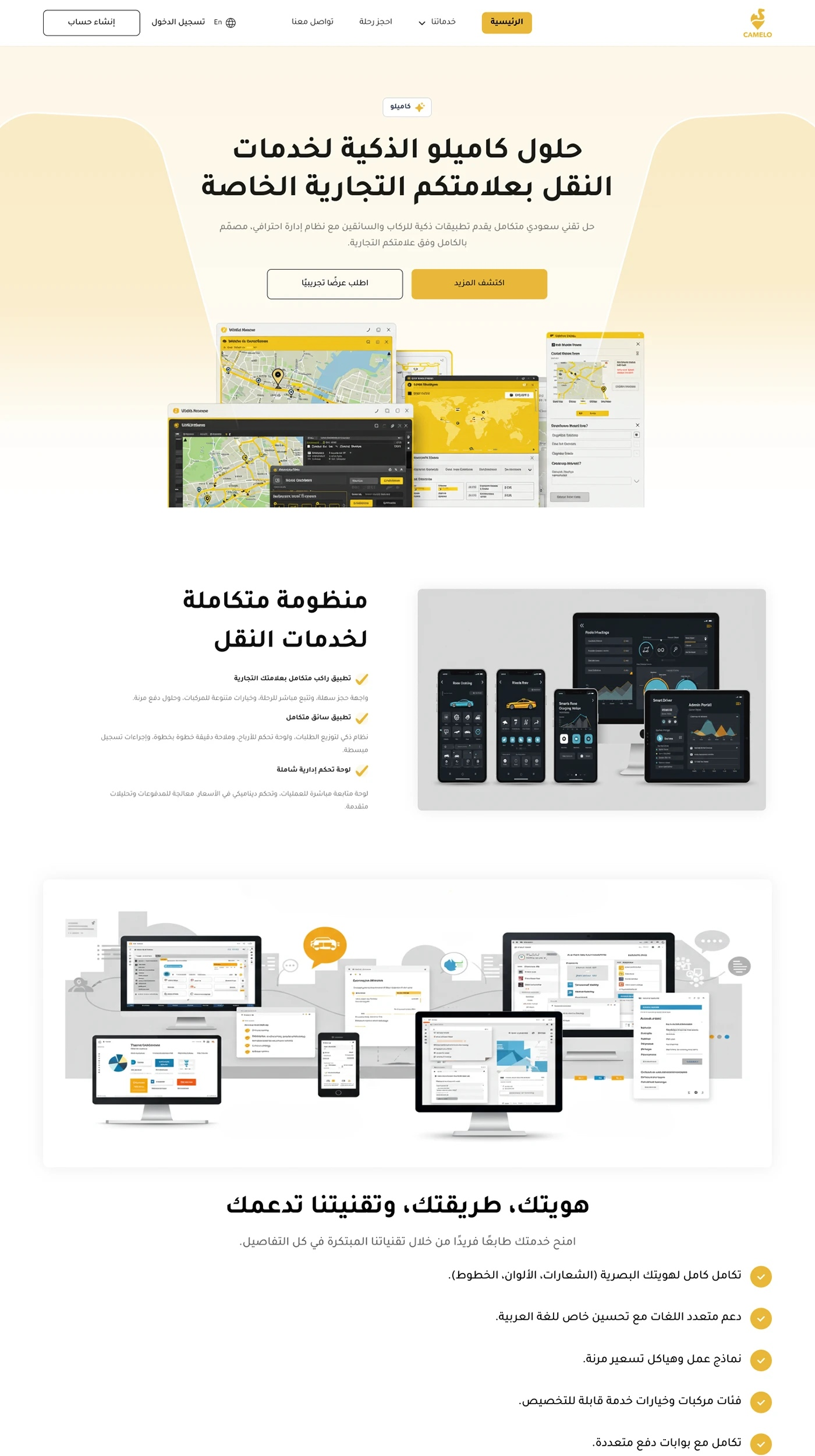
Rider and driver applications, the admin layer and customisation explain the operator’s proposition.
Its counterpart appears in The white-label offer changes what the buyer is buying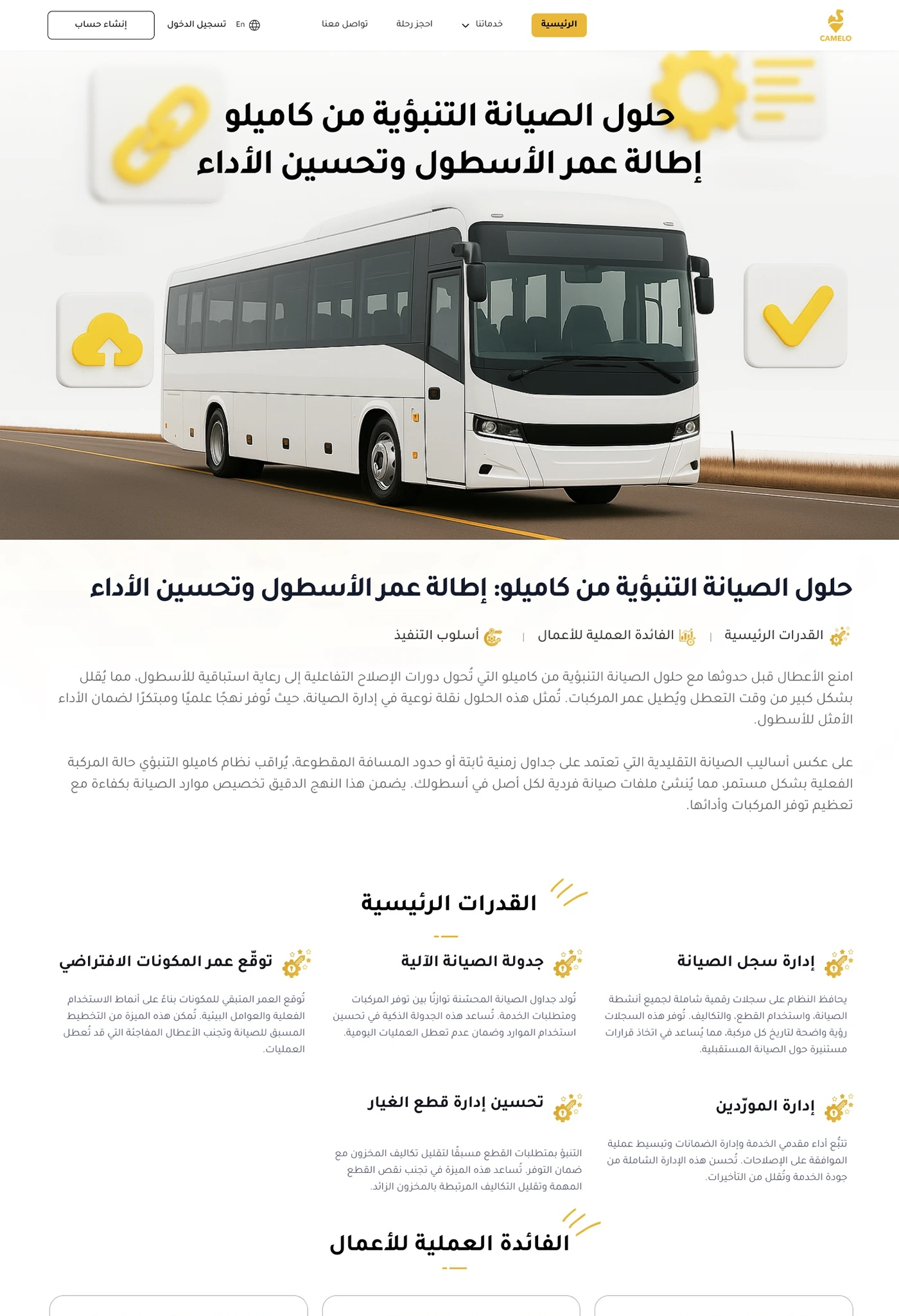
Maintenance has its own account of condition, scheduling and service history.
Its counterpart appears in The solution page carries the case for relevanceScreens document the content and its presentation. Prices, ratings and numerical claims within the original designs are not measured outcomes of this engagement.