Different buyers, different first questions
A finance director assessing ERP, an operations lead evaluating workflow change and an executive exploring AI transformation start from different questions. A broad “we do AI” message leaves each of them to find their own way in.
Organise by buying question, then describe capability
The website gives the company its own introduction and groups the services separately. This is offer architecture at the communication layer: visitors move from the umbrella promise to the line of work that matches their problem. The earlier AMK website had already separated product from consulting; AI Minds is a later, separate project with a stronger ERP and AI emphasis.
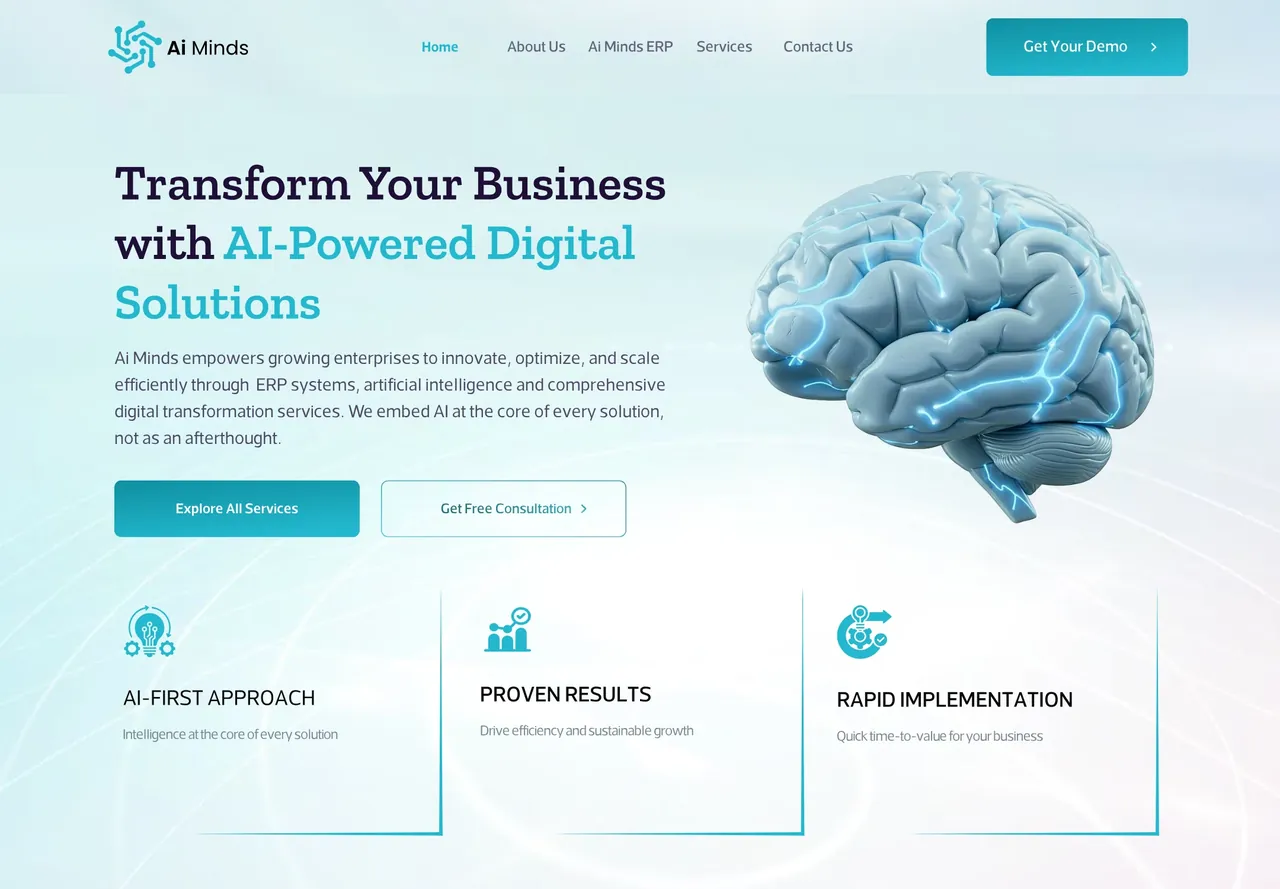
The opening explains the company offer before presenting routes into services.
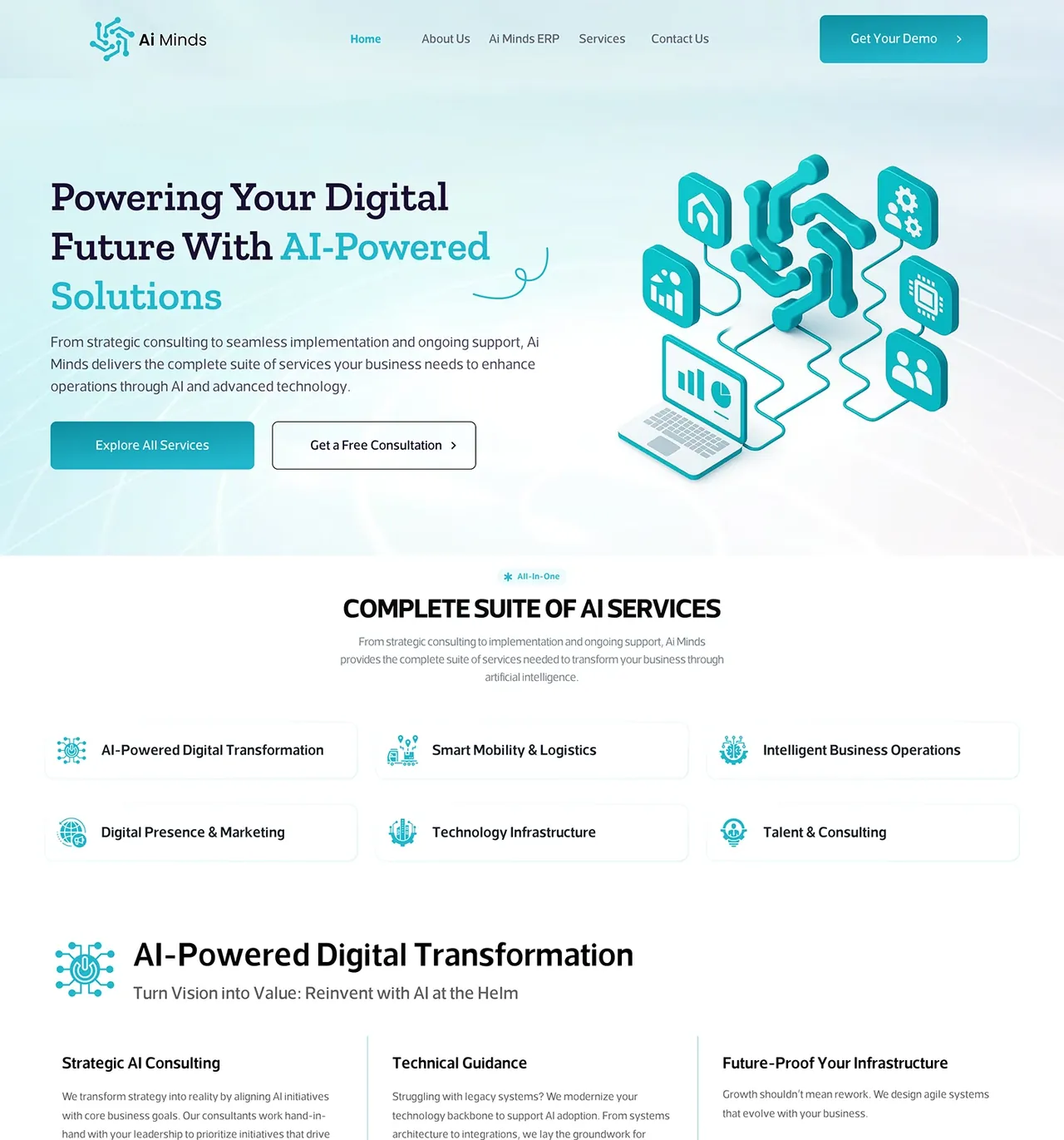
Each service family is named for the problem it addresses and laid out for scanning.
The Saudi market rewards specific offers
In the Saudi market, many suppliers give ERP and AI their own clear destinations, while others organise around a platform or a sector problem. AI Minds now has a separate ERP route and service families too. A company-level story needs this lower layer of clarity before it can sell anything.
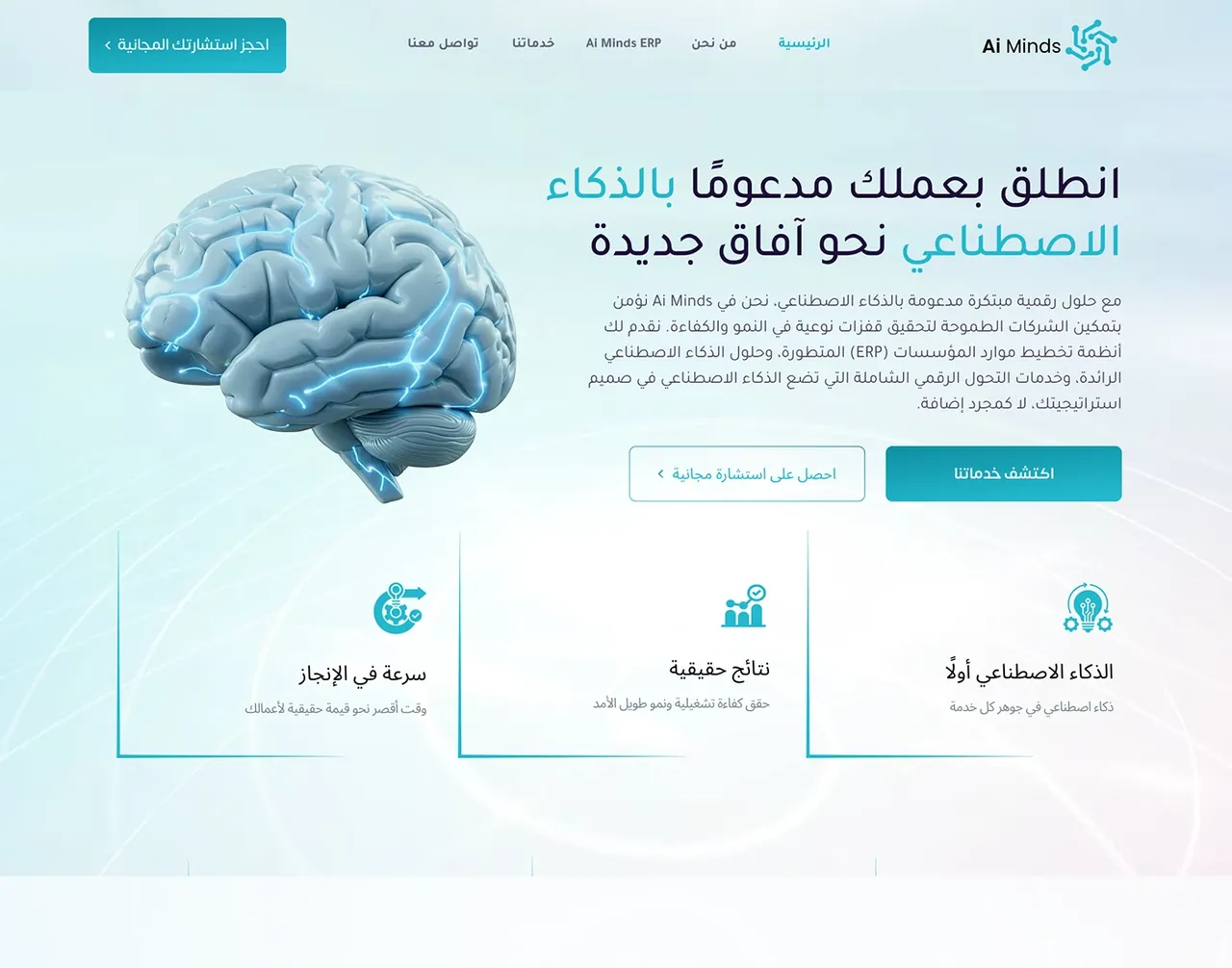
The Arabic opening carries the same offer in its own reading direction.
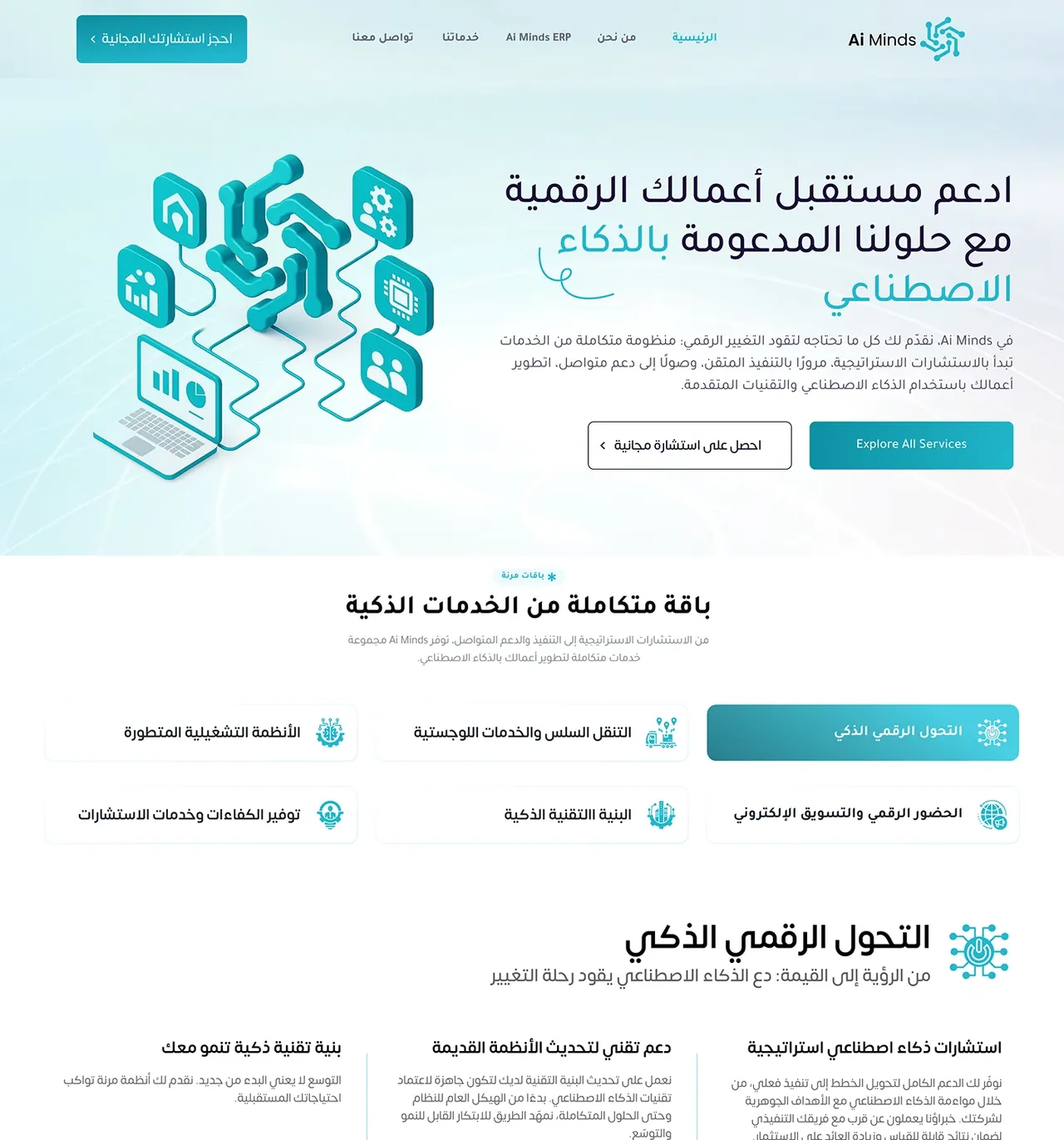
The service architecture works in Arabic as well as English.
Each segment needs its own proof and next step
Someone comparing enterprise systems needs product scope and a route to a demo; someone assessing a strategic service needs context and a conversation. The homepage, company and services pages in both languages make those differences legible, with design and development shared with the team.
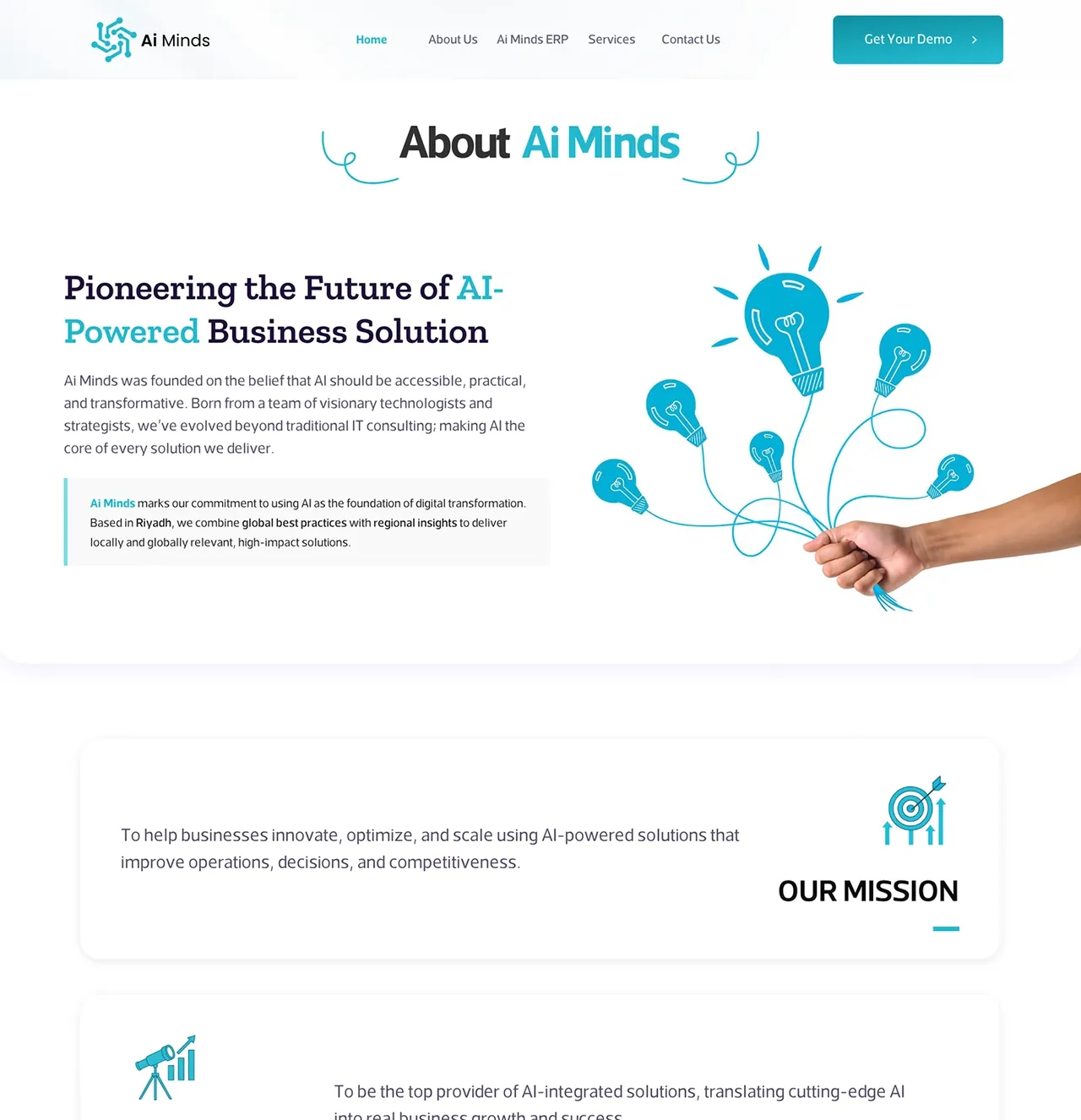
The About page carries the company story, so the service pages do not have to.
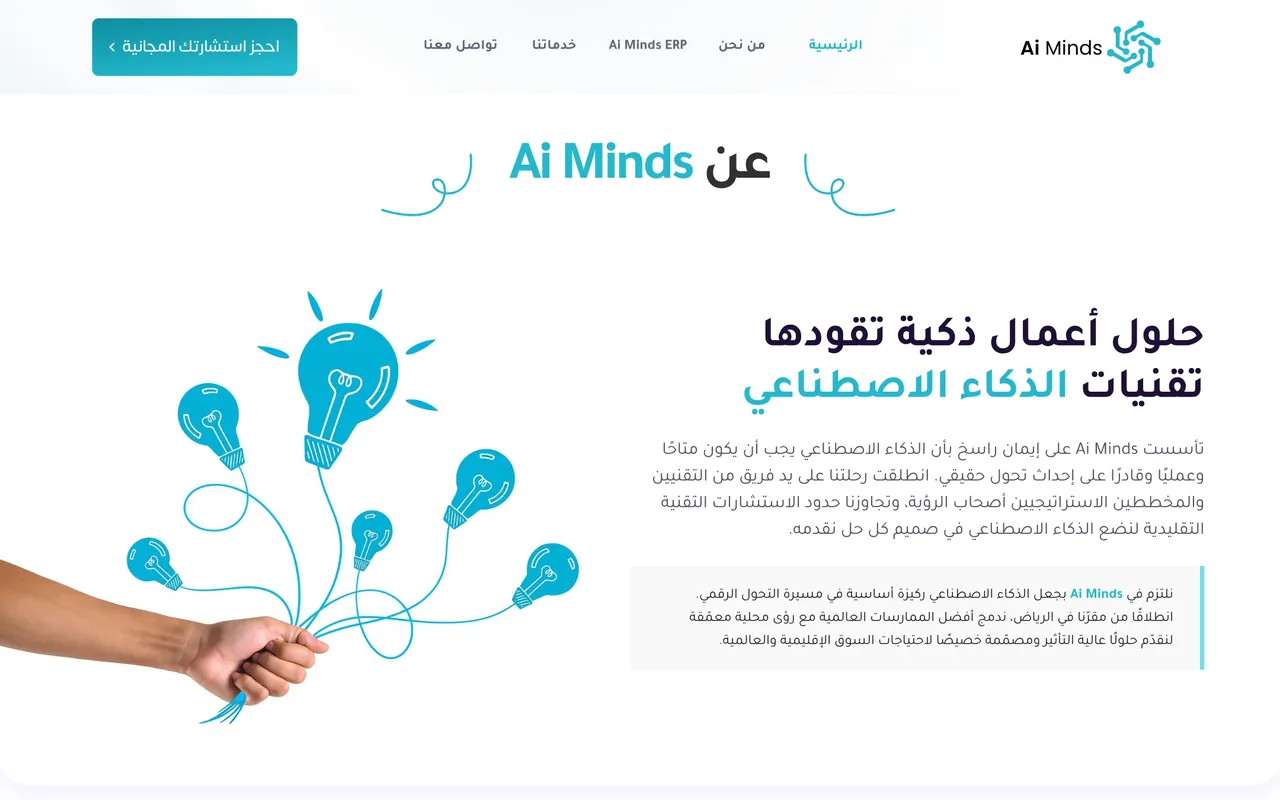
The paired page shows the Arabic structure and voice.
Where AMK ends and AI Minds begins
AMK later became AI Minds, with ERP and AI at the centre of the new company. The two websites show that shift in emphasis clearly; the pricing and product decisions behind it were the company’s.
Define the buying situation before the ideal customer
The project points to several buying situations: comparing an ERP system, applying one to a sector and exploring an AI or transformation service. The enquiry form asks for company size and industry, which is a useful start, though a form field is not yet a customer profile.
To qualify an opportunity, I would ask about existing processes and systems, who owns the decision and what kind of change is on the table. Those answers turn a broad enquiry into a defined engagement.
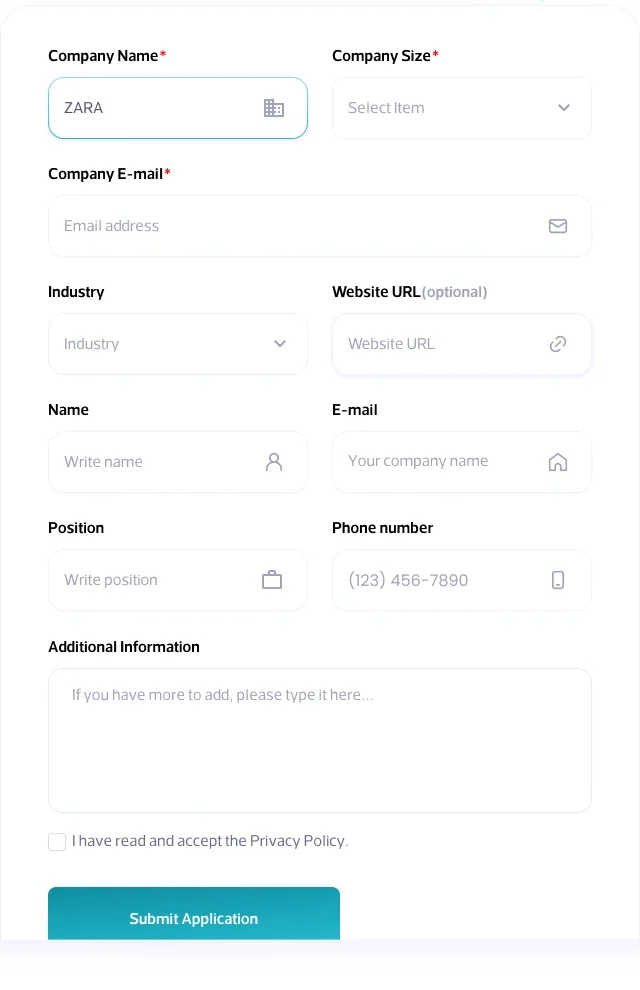
The enquiry asks about the company, its size and industry, so the first conversation can start from the business rather than from a blank message.
Product, function and sector are different layers
The ERP pages add a useful commercial layer: the platform is described through business functions, then related to industries. Finance and people management are functional needs; manufacturing and retail are the settings in which those needs occur. Keeping the two dimensions visible stops an industry label from becoming an unexplained extra product.
| Layer | Buying question | What it means commercially |
|---|---|---|
| Company | Who can help us? | Establish provider context. |
| Product or service | What are we considering? | State scope and delivery model. |
| Function | Which process needs attention? | Explain relevant modules or capabilities. |
| Industry | Does this fit our setting? | Show an applicable workflow and evidence. |
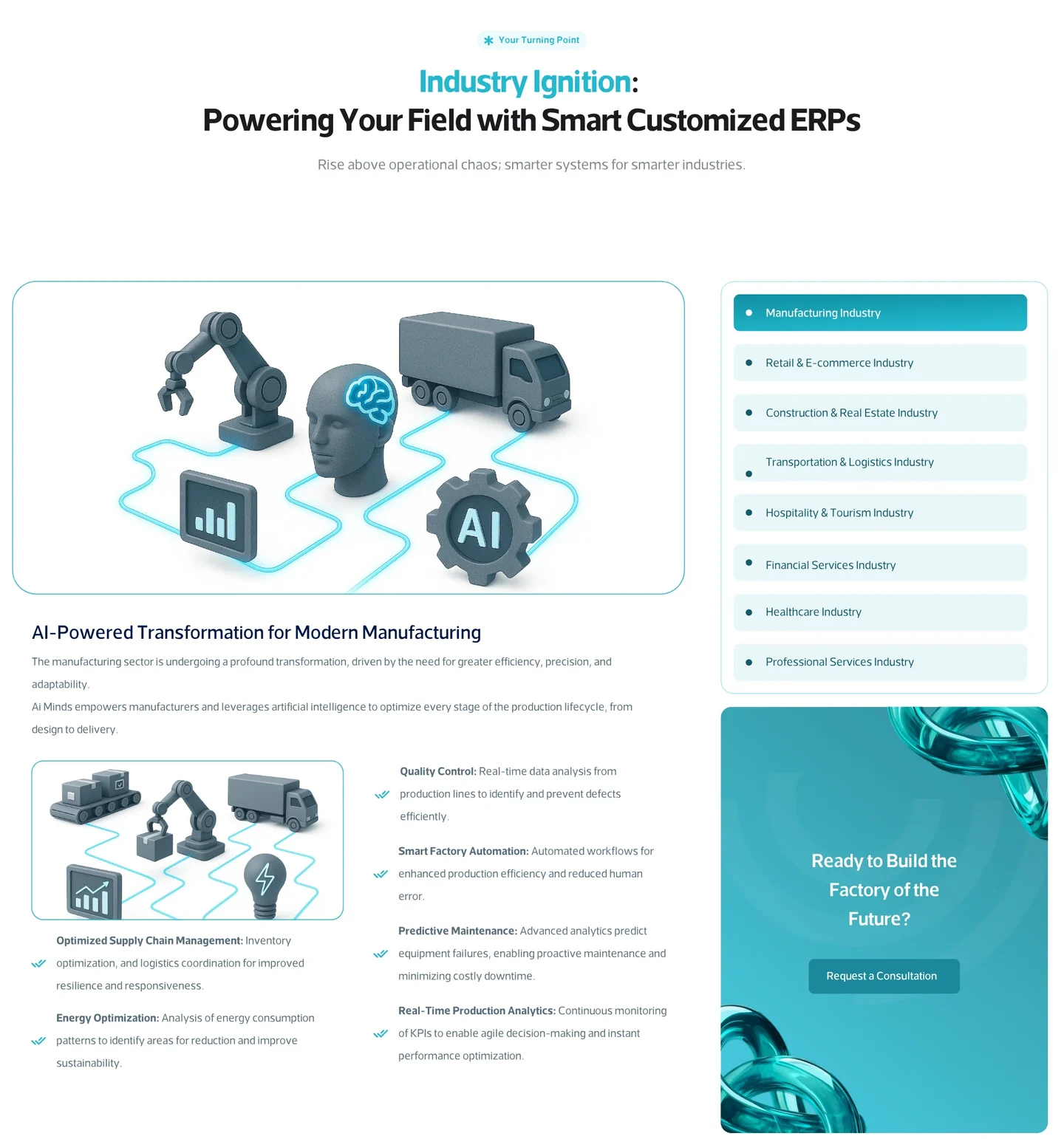
Choosing an industry changes the explanation: manufacturing gets its own account of how the ERP fits, followed by a consultation route.
Different entry points, different sales conversations
Buyers searching in English mix named ERP vendors with generic system and transformation terms. A buyer comparing suppliers is close to a shortlist; a leader exploring a change programme is still defining the problem. Arabic supplier pages draw the same line through system functions and implementation language.
In go-to-market terms, each entry point needs a fitting explanation, relevant proof and a clearly described next conversation. ERP evaluation can lead to a scoped demonstration; a broader service enquiry starts with a problem discussion.
Buyers researching ERP implementation in English find guides, common mistakes and practical checklists, while Arabic searches for استشارات التحول الرقمي mix government advisory material with private consultancies. Product fit and delivery risk need explaining; an advisory engagement needs a defined problem and scope.
Commercial clarity also means careful claims
The full presentation includes proposed prices and numerical impact statements. A figure builds trust only when the reader can see where it comes from, so each claim needs a source or a plainer promise.
ERP buyers worry most about unclear requirements and about who is responsible for implementation. A sales story that spells out scope and who does what answers that worry directly.
From a broad promise to recognisable offers
The website’s commercial story moves from a broad company promise to identifiable offer families and the buying questions behind them: research-led positioning that a buyer can follow.